
Repeated door model patterns
In a town this size, the same handful of door models and openers keep showing up on our schedule, because most of the housing went up in a tight window.
Stanford, Danville
Garage door maintenance for Stanford's roughly 1,500 households, ten miles from our Danville shop. Built mostly in the 1970s, these doors need specific care.
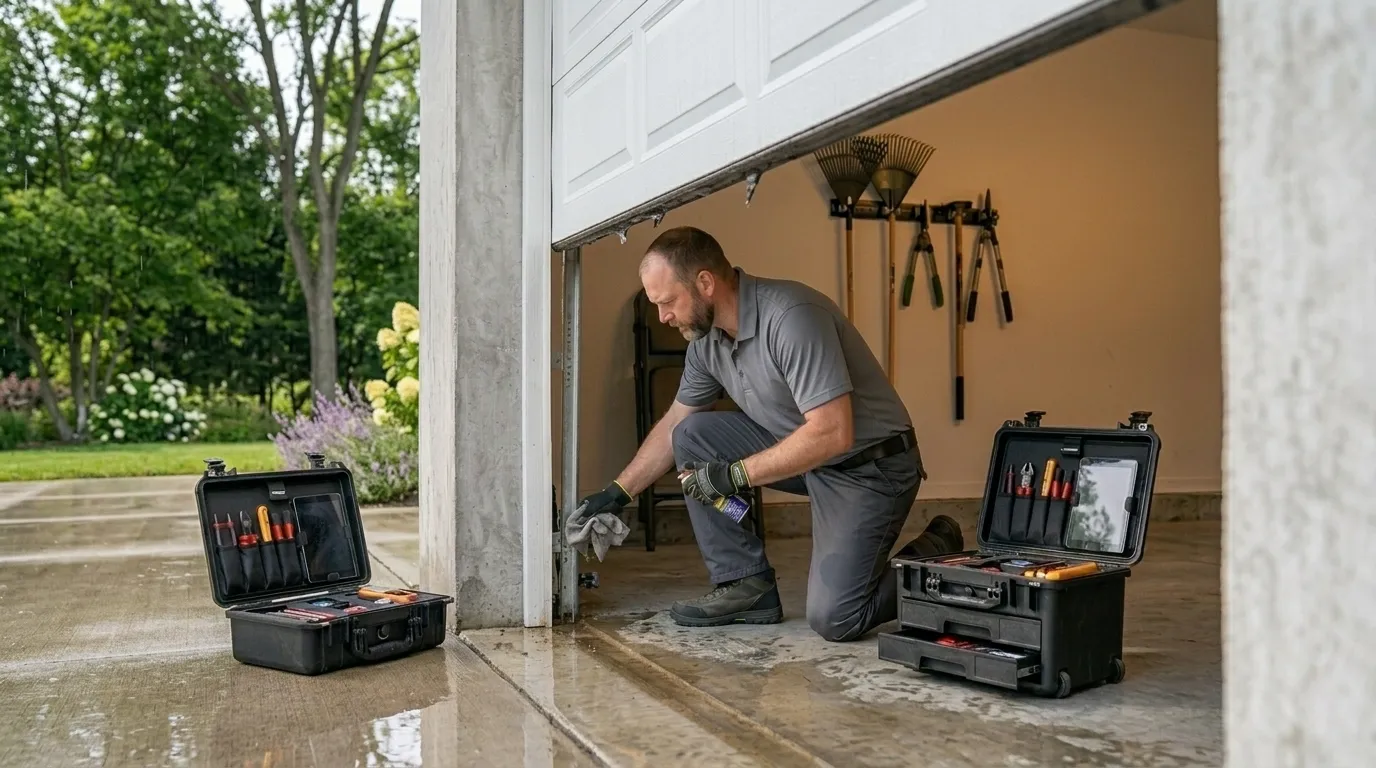
On the truck
Stanford is a small town - around 1,500 households, ten miles out from our Danville shop. That size matters more than it sounds like it should.
In a town this size, the same handful of door models and openers keep showing up on our schedule, because most of the housing went up in a tight window.
The area's median build year is 1977, a few years past the wider service region's 1972 median, which puts a lot of Stanford's original hardware into a slightly newer generation of torsion spring cones and rail sizes than what we see on older streets closer to Danville.
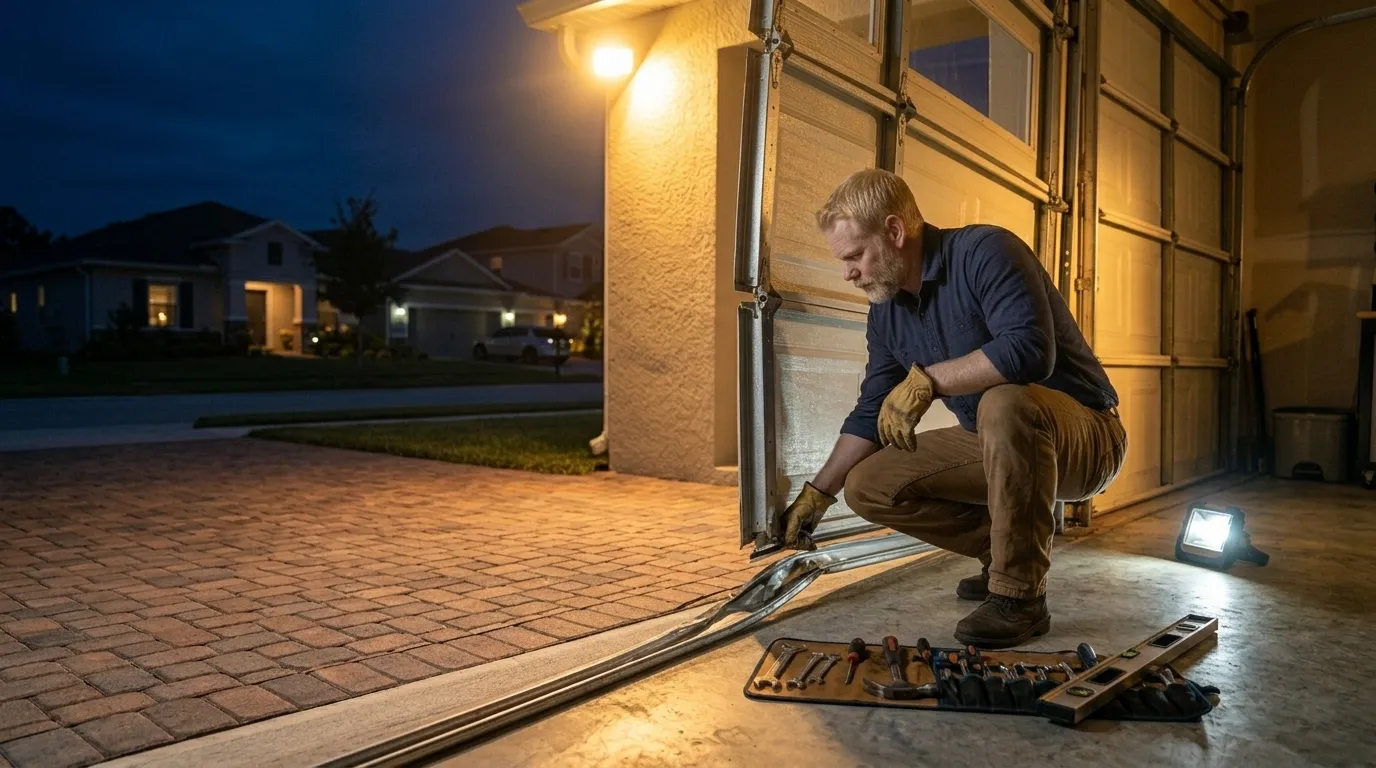
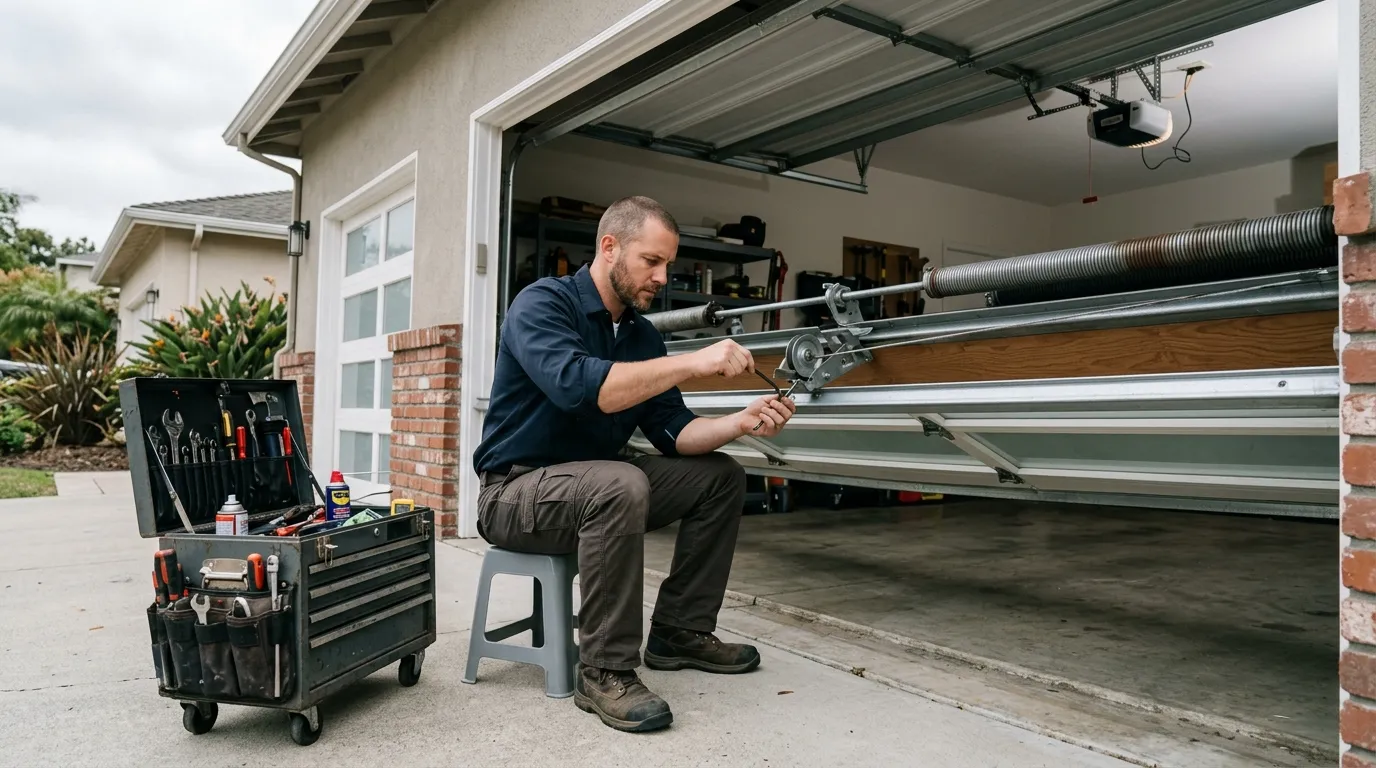
We keep two spring lengths on the truck instead of one because of that gap. We don't stock every obscure bracket ever made - if a door has a part that's been out of production for decades, we tell you that up front rather than promising a same-day fix we can't deliver.
Job timing
A maintenance visit here isn't rushed, but it also isn't a half-day project. We check spring tension, lubricate rollers and hinges, inspect cable wear, test balance, and tighten track bolts that have worked loose from seasonal expansion. Cold-band winters stiffen steel torsion springs and can make an opener strain on a cold morning even when nothing is actually broken - that's one of the most common calls we get from Stanford in January and February. Because we're driving out from Danville, we plan Stanford stops as part of a route rather than treating each call as a standalone trip. That doesn't mean slower service, it means we ask you for a flexible morning or afternoon window instead of a fixed hour, and we stick to it once it's booked.
Booking
Since we're not based in Stanford, booking works best when you give us a day range rather than an exact hour on short notice.
Ten miles isn't far, but it means a Stanford stop gets planned alongside other calls in the area rather than squeezed in on a whim.
If your door is making a specific noise or dragging on one side, tell us that when you call - it helps us bring the right spring length or roller type instead of guessing. We don't offer a walk-in counter or same-day emergency guarantee here; that's a Danville-shop service, not something we promise ten miles out.
Local causes
A door built into a house from the late 1970s fails differently than one from the 1950s or from new construction.
Stanford's housing stock, centered around 1977, tends to run torsion springs matched to slightly heavier steel doors than the lighter aluminum panels common on older stock elsewhere in the service area. Combined with cold-band winters, that means the spring fatigues from repeated cold-stiff cycling rather than snapping from age alone - a slower failure that shows up as a door that struggles to lift fully on the coldest mornings before it fails outright.
Rollers on this era of door were often steel rather than nylon, so the noise complaint we hear most from Stanford calls is grinding, not the softer clunk you'd get from a worn nylon roller on a newer install.
Pricing
We don't have a published price list for maintenance work - costs depend on what the door needs once we're looking at it, not a flat number we can quote over the phone. What we can tell you is that Stanford households have a median income around $55,000, a bit above the $50,910 median across the wider service area, and we've noticed that translates into more owners booking a tune-up ahead of a failure rather than waiting for a spring to snap. That's cheaper in the long run, but we're not going to pretend we have a fixed rate to promise you here.
Our process
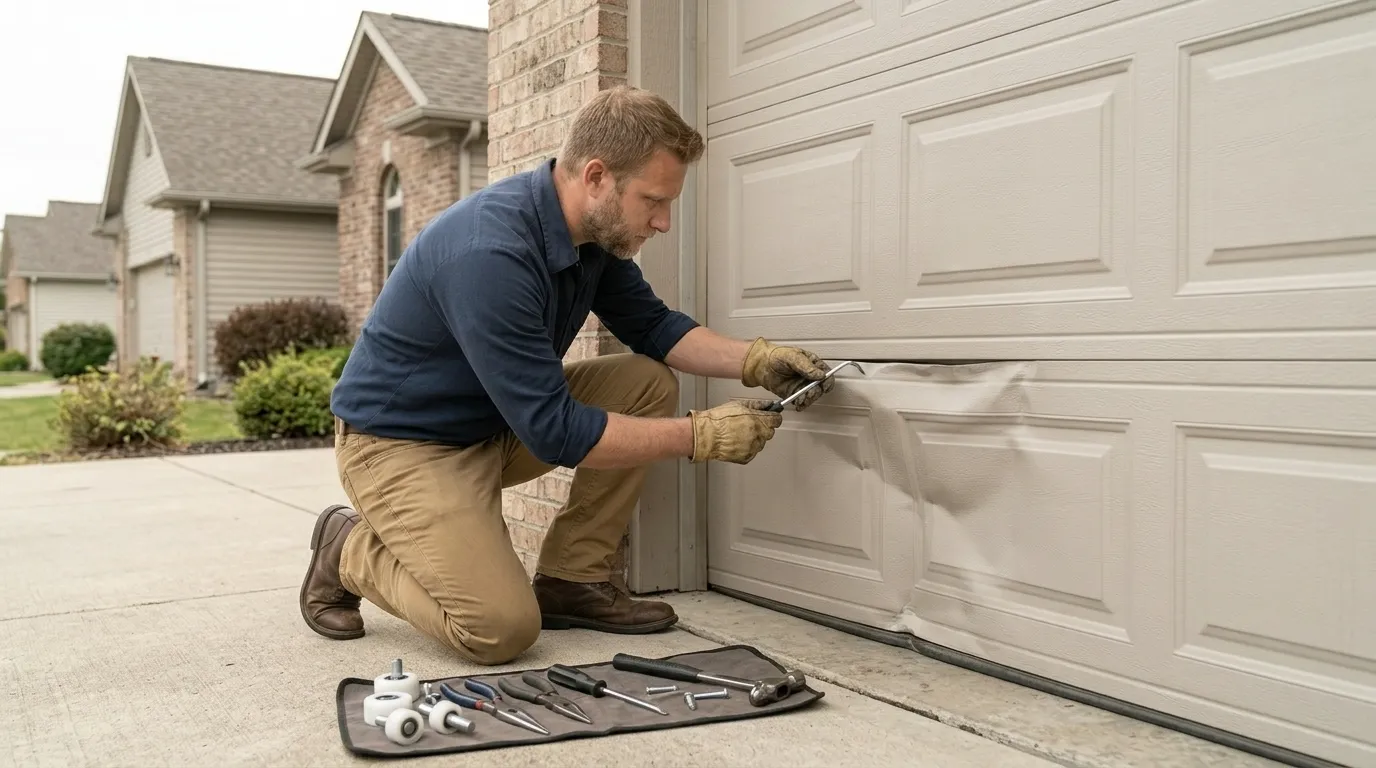
Most Stanford maintenance calls start the same way: we test the door's balance, because an out-of-balance door is what wears out openers, cables, and rollers faster than anything else. We adjust spring tension to match the door's actual weight, not a factory default, replace worn rollers before they start chewing up the track, and lubricate hinges and hardware with something that holds up through a cold winter. If a spring has already fatigued from a few years of stiff-cold cycling, we replace it rather than trying to stretch its life another season - pushing a tired spring past that point usually ends with a cable snapping instead, which is a bigger and more expensive job. We're honest when a repair isn't worth doing and replacement makes more sense instead.
Questions
About ten miles from our Danville location. We treat Stanford as a regular stop on our route rather than a separate branch, which is why we ask for a flexible booking window instead of an exact hour on short notice.
Stanford sits in a cold-moderate climate band, and steel torsion springs stiffen in low temperatures. If your opener strains only in the cold, that's often a sign the spring tension needs adjusting rather than the opener itself failing.
Most of the area's housing dates to around 1977, so we stock spring and rail sizes matched to that era. If a door has an out-of-production part from decades further back, we'll say so rather than promise a fix we can't source.
We don't guarantee same-day service ten miles out from Danville. Booking ahead with a flexible window gets you a more reliable visit than a last-minute call.
Explore more
Ready when you are
Danville Garage Door Pros repairs and installs garage doors, springs and openers in Danville, KY and the surrounding area.