
Broken Torsion Springs
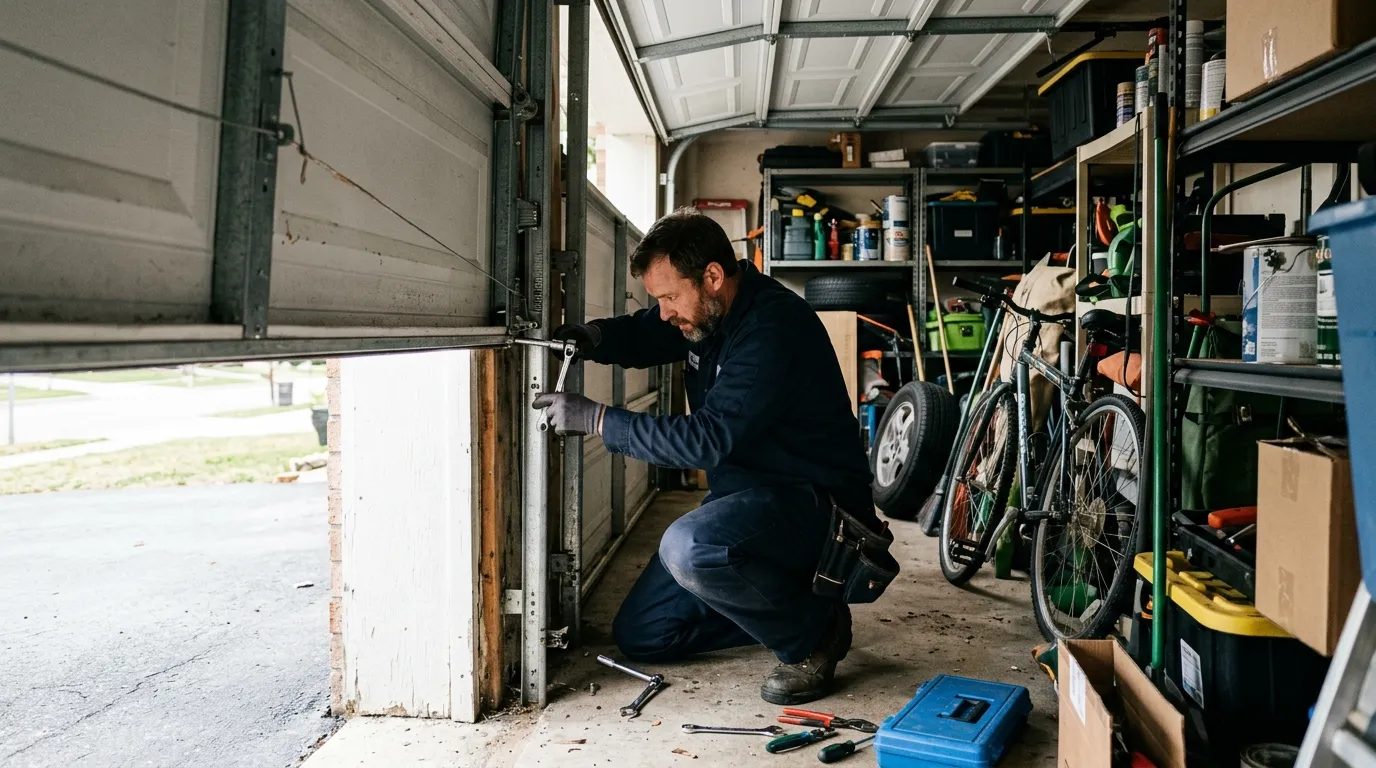
Older torsion springs can reach the end of their useful cycle life after decades of daily operation.
LOCAL GARAGE DOOR SERVICE • DANVILLE, KY
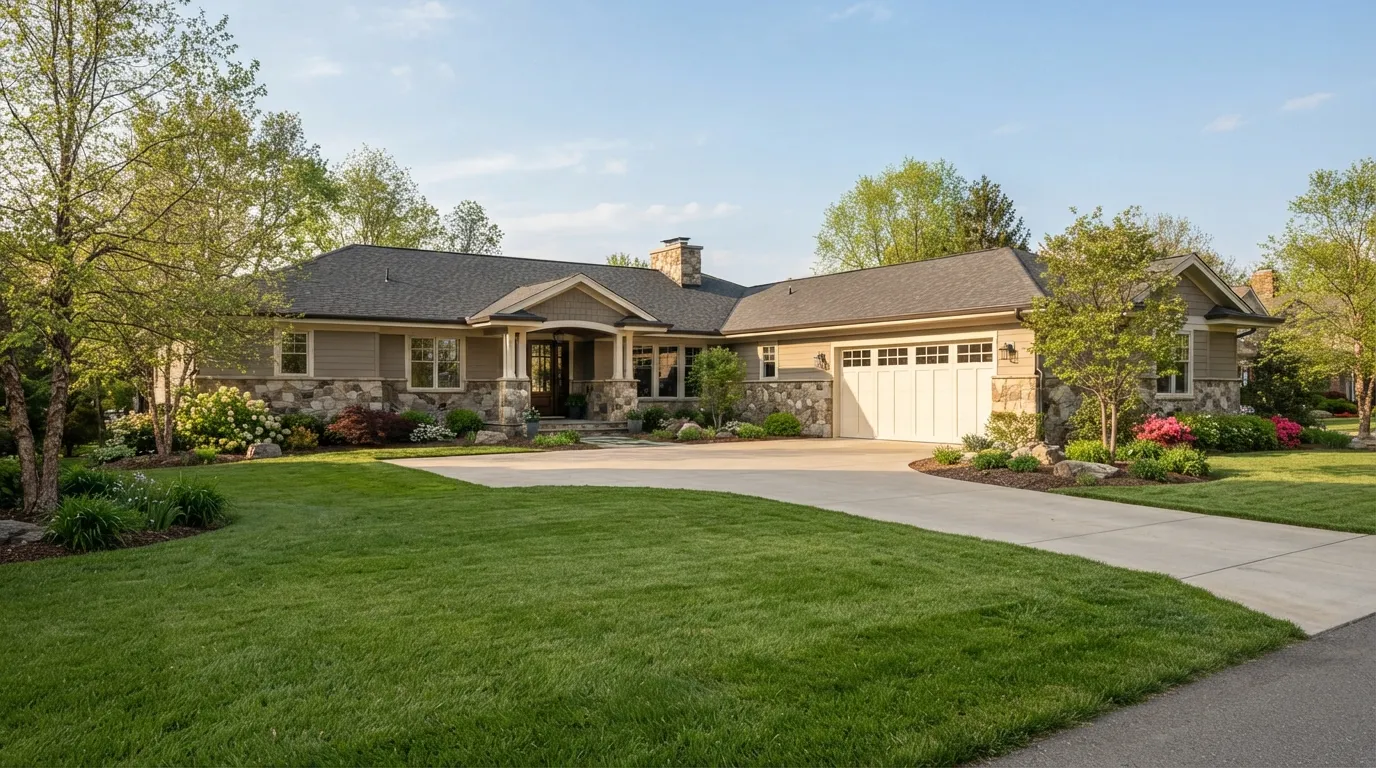
Garage door repair for Danville homes built mostly between 1969 and 1991, covering torsion springs, openers, tracks, cables, rollers, panels, weatherstripping, and the residential garage door systems common across the area's 1960s- and 70s-heavy housing stock.
GARAGE DOOR SERVICES
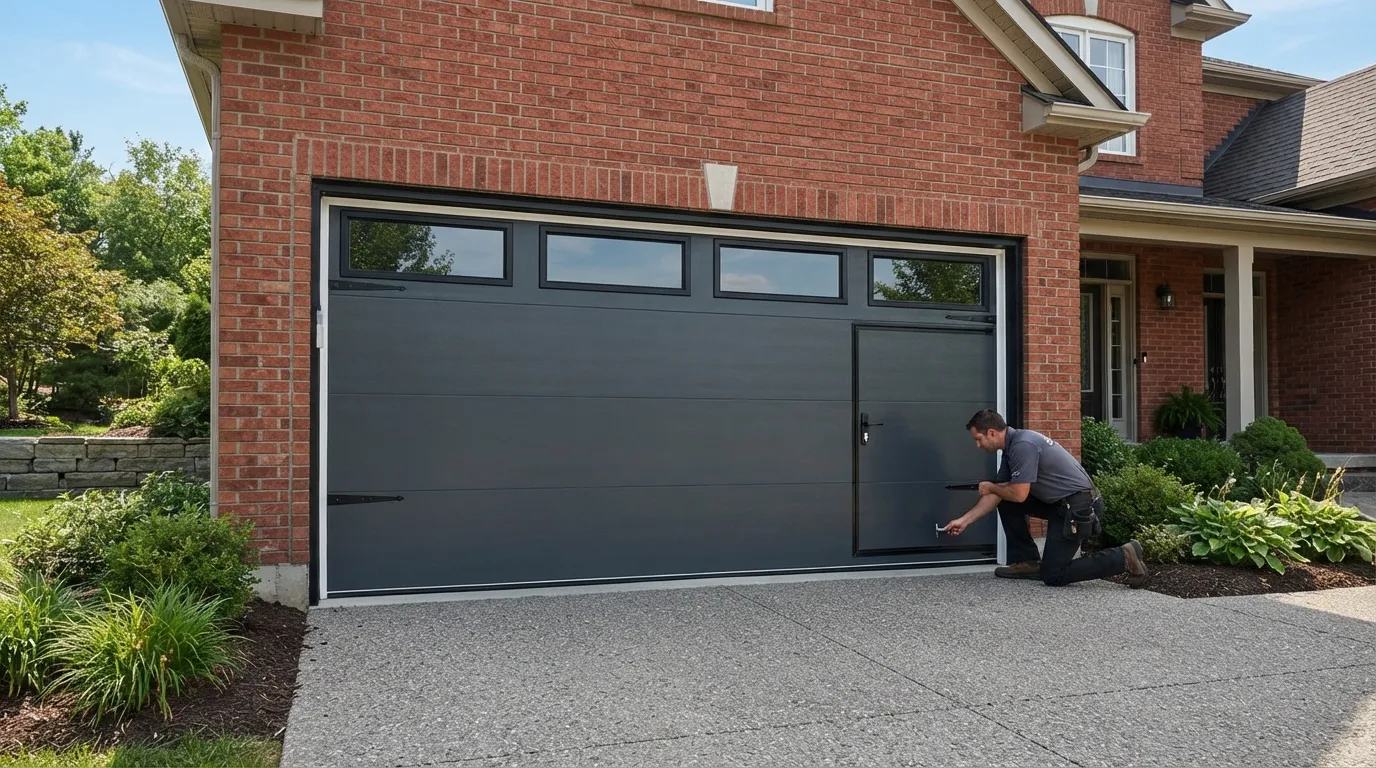
From broken torsion springs and frayed cables to worn rollers, aging chain-drive openers, track problems, older door openings, and complete replacement, we work on the residential garage door systems common across Danville's older housing stock.
COMMON DANVILLE GARAGE DOOR PROBLEMS
Most calls track straight back to the age of the local housing. Danville's stock runs heavily through the 1960s and 70s, with the bulk of homes built between 1969 and 1991 and the median around 1972, so many garage doors still use original or older replacement torsion hardware, tracks, rollers, cables, hinges, and openers that have accumulated decades of use. Broken torsion springs on double doors are the most common job, followed by worn rollers and cables fraying near the drum. Older openers still in service are often chain-drive units approaching the end of their motor life. Kentucky's freeze-thaw winters add to it - repeated cold cycles work on seams, hinges, and weatherstripping on doors that were never insulated to begin with.
Older torsion springs can reach the end of their useful cycle life after decades of daily operation.
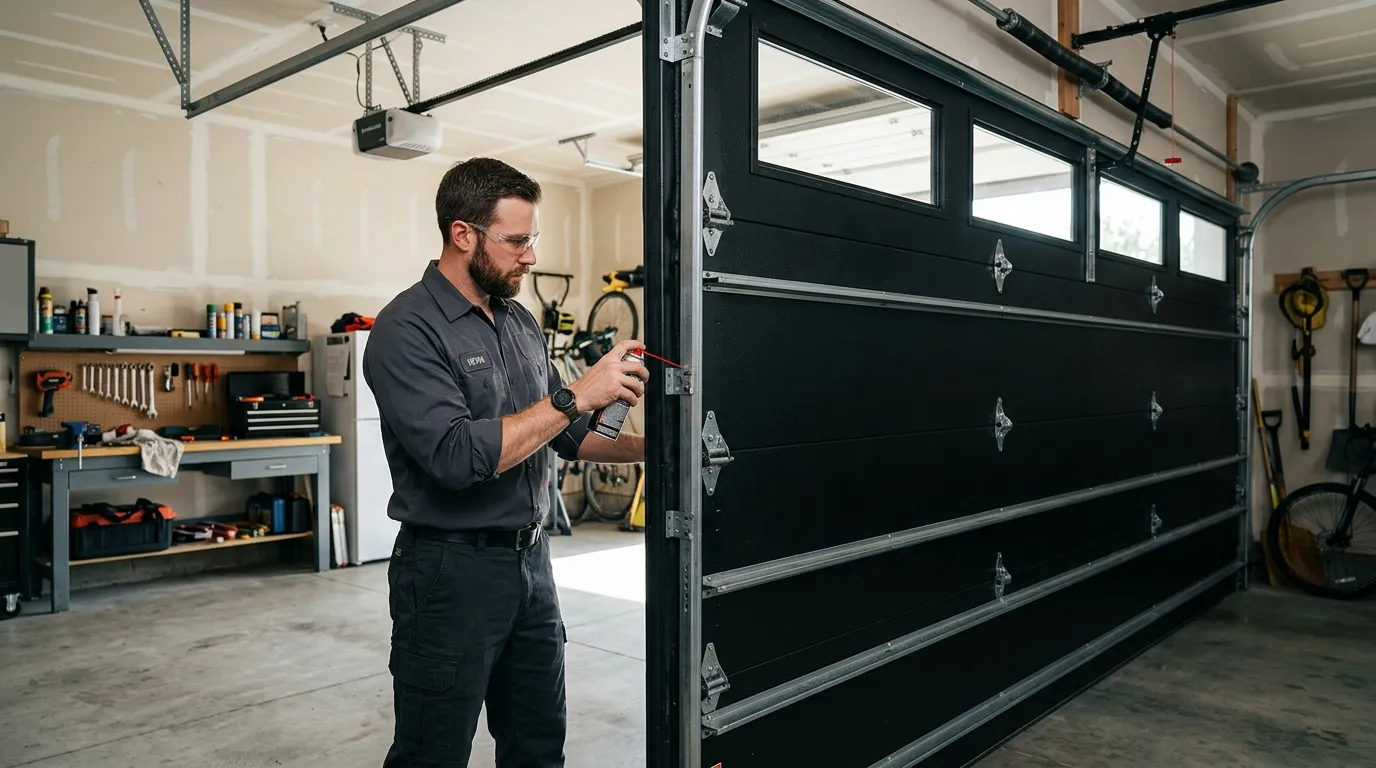
Older rollers can become noisy, rough, or worn enough to affect smooth door travel.
Older cables can gradually wear near drums and other repeated load points until replacement is needed.
Older chain-drive units can develop motor, gear, rail, or other mechanical problems after decades of service.
Hinges, brackets, and older tracks can loosen, shift, or wear after years of operation on older residential doors.
None of it is exotic - it's the same handful of failures repeating across homes built within a few years of each other, which is why we can usually tell what's wrong before we open the panel.
LOCAL HOUSING MATTERS
Housing across the service area is concentrated heavily in the 1960s and 70s, with the bulk of homes built between 1969 and 1991. Older garage openings, tracks, spring systems, and jambs don't always match the dimensions or mounting assumptions of current off-the-shelf hardware.
Past repairs can introduce newer kits or parts onto older frames, which creates alignment or fit problems if the original opening wasn't accounted for properly. Across the service area there are roughly 10,228 households and about 5,247 owner-occupied houses.
Two houses built in the same year can still have different garage door hardware depending on what previous owners or repair companies changed over the decades, so inspection matters more than assumption.
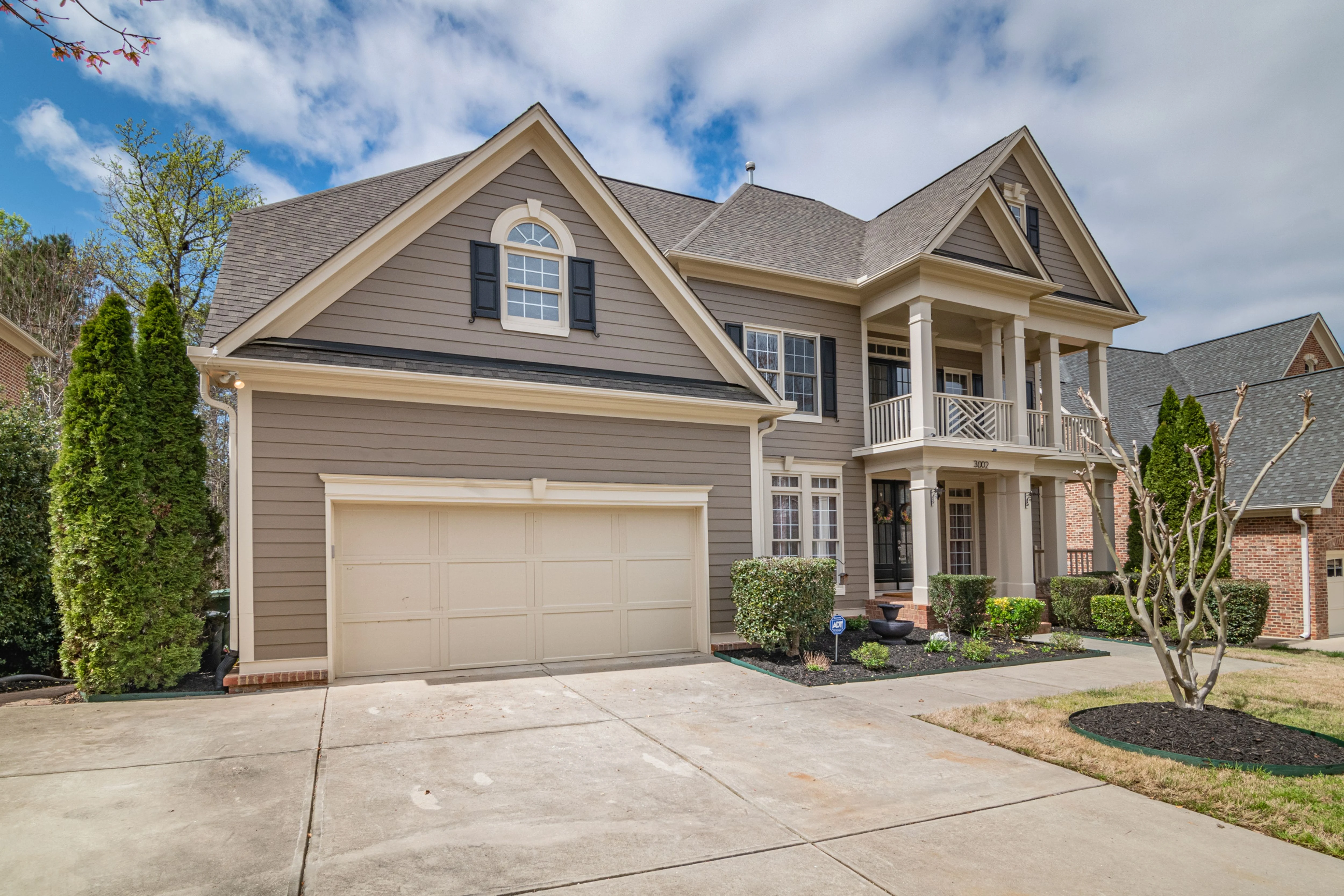
OLDER DANVILLE GARAGE DOOR SYSTEMS
Homes concentrated around the late 1960s through early 1990s can include older rough openings, legacy torsion systems, replacement hardware, aging tracks, chain-drive openers, and several generations of repairs on the same door.
Garage openings from older homes may not line up exactly with today's standard door and track dimensions.
Older torsion systems can use spring sizing, brackets, drums, and related hardware that differ from newer installations.
A door may have newer springs or an opener while older tracks, cables, hinges, or panels remain in service.
Some homes can still have older chain-drive units or later replacements that now have decades of use themselves.
CLEAR REPAIR GUIDANCE
We don't have a fixed price list, and the final number depends on what has actually failed and the condition of the surrounding hardware. A grinding noise can come from a roller, track, opener, or another mechanical issue, so correct diagnosis helps avoid replacing the wrong part.
Median household income across the service area is about $50,910, and we price jobs with that in mind rather than treating every call like it's coming from a bigger market. On older doors, the repair decision also accounts for whether the new part will work reliably with the springs, tracks, panels, frame, and opener around it.
We give the price before work begins rather than inventing a number before seeing the actual door.
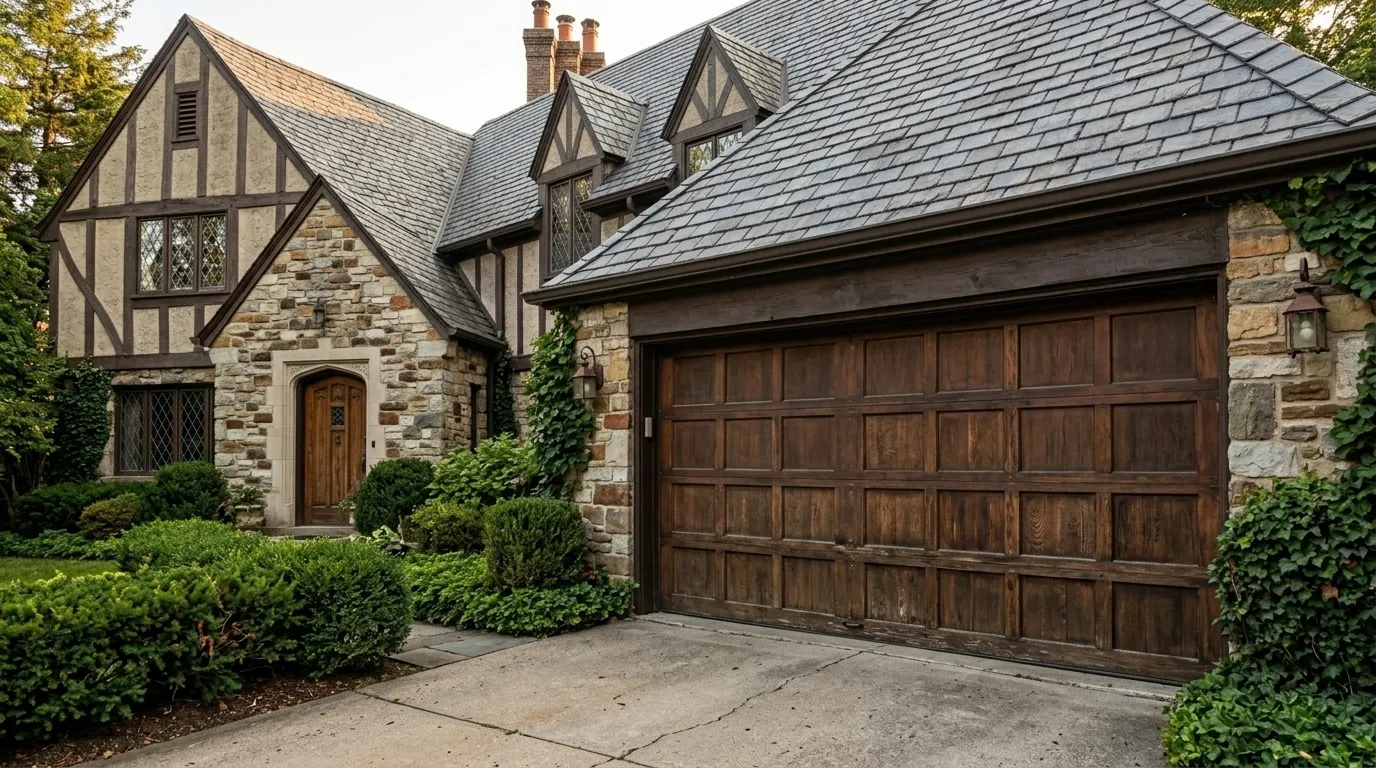
REPAIR OR REPLACE?
A repair makes sense when the door structure remains sound and one serviceable part has failed. A spring, roller, cable, opener, or isolated track repair can still extend the life of an older door when the panels and frame remain straight and usable.
Replacement becomes more practical when older steel or wood panels have significant moisture damage, the door no longer holds alignment, or several major components are failing together. Cold-weather exposure and decades of use compound existing wear on older seams, hinges, seals, and panels.
The goal is to repair what's worth keeping and avoid spending money repeatedly on a door that's structurally finished.
WHAT TO EXPECT
Tell us whether it won't open, is stuck halfway, makes unusual noise, or the opener runs without moving the door.
Because much of the housing shares a similar build era, the approximate age can help indicate what spring, track, opener, and door generation may be installed.
The actual springs, cables, rollers, tracks, opener, panels, and surrounding hardware are checked before the repair is recommended.
If the repair needs an uncommon or older component that isn't on the truck, we'll explain that rather than promising an immediate fix.
Service Area

QUESTIONS
On a lot of Danville houses built in the 1960s-80s, the original torsion spring was sized for the door as it shipped, not for any added insulation or hardware changes since. Once a spring's cycle life is used up, it snaps, and springs from that era have usually well outlived their rating. Replacing it with a correctly sized spring for your actual door weight solves the repeat-breakage problem.
Sometimes. If the panels are still straight and the frame isn't racked, a spring, roller, or cable repair can extend the door's life for real money saved. But if the steel or wood has taken on moisture damage over the decades or the door won't hold alignment anymore, we'll tell you replacement is the better spend rather than patching something that's structurally tired.
Yes. We cover Danville and reach into Junction City, Burgin, Harrodsburg, Stanford, and Lancaster. Wilmore is close to the edge of our range at eighteen miles out, so give us a call and we'll tell you straight whether it fits the day.
It depends on what's actually broken, and we're not going to quote a number without seeing the door. We do keep in mind that Danville's median household income is around $50,910 when we price a job, and we'll give you a clear number before we start any work, not after.
READY WHEN YOU ARE
Tell us what the door is doing and we'll help you figure out whether you're dealing with a spring, cable, roller, track, opener, damaged panel, older opening, or an aging system that's reached the point where replacement makes more sense.