
Retrofit opener wiring issue
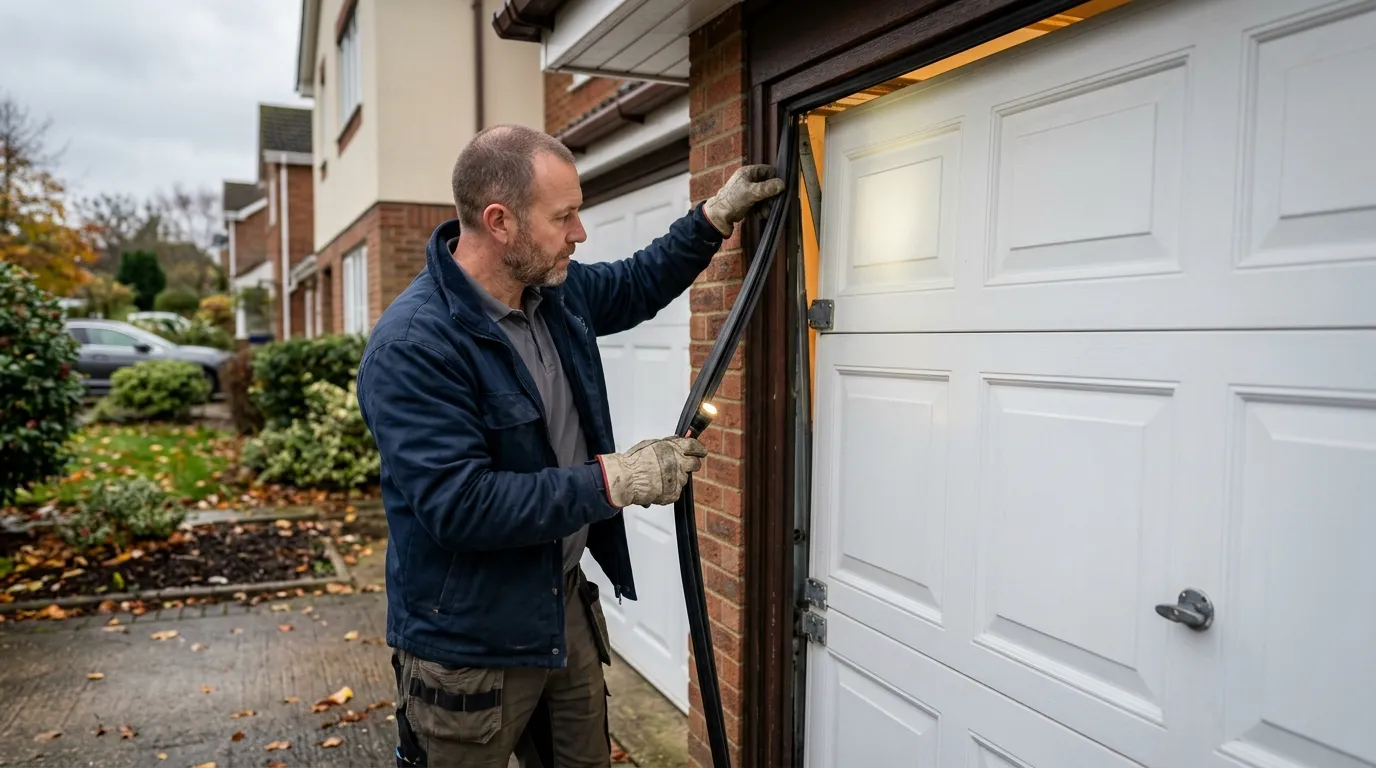
Openers from a later retrofit era add time, mainly because the wiring and wall control don't always match what the mounting bracket expects.
Stanford, Danville
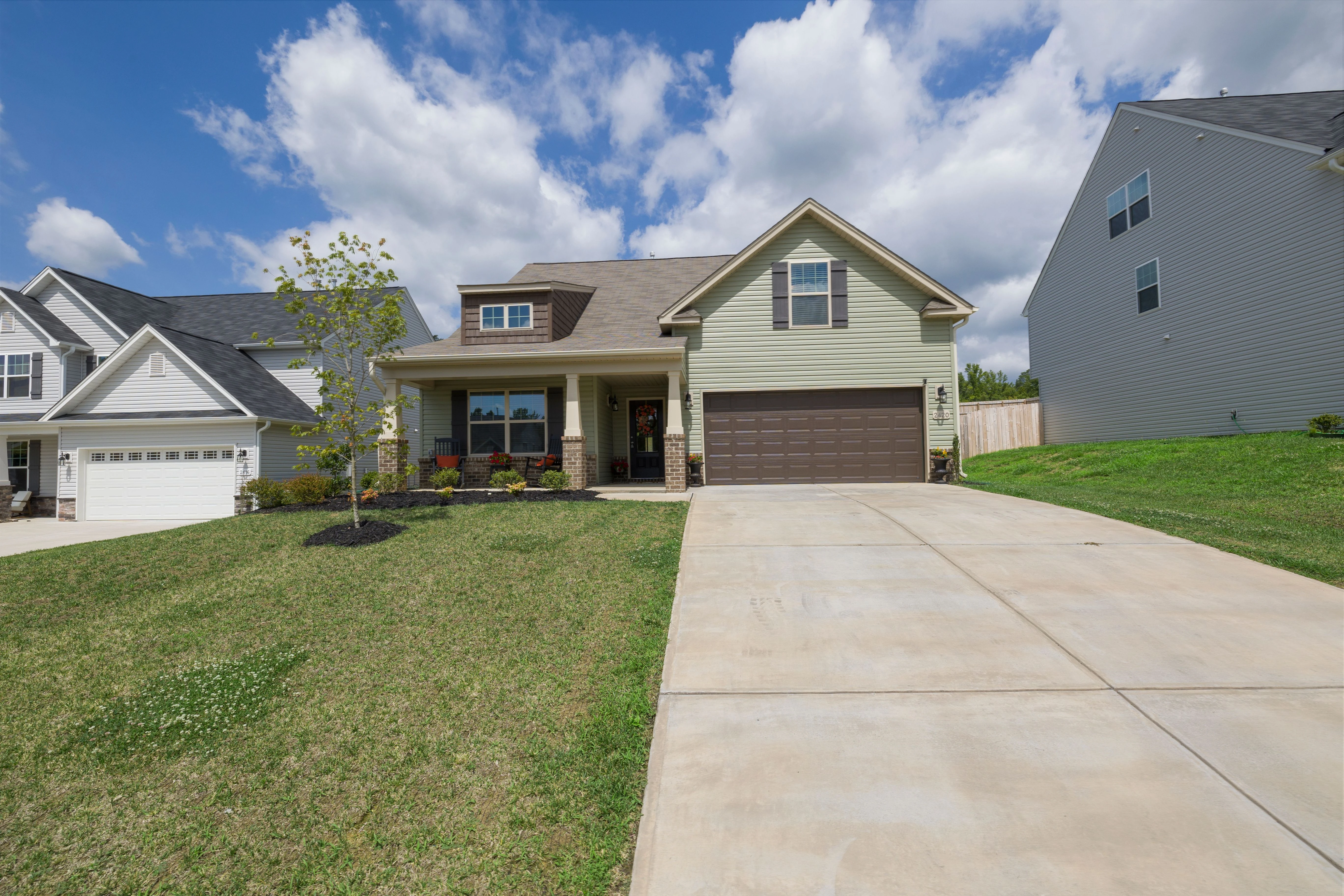
Stanford homes built around 1977 carry mid-70s steel doors and aging hardware. We travel from Danville to fix springs, openers, and tracks on these doors.
On the truck
The typical Stanford house went up around 1977, which puts most original garage doors and their first-replacement doors squarely in the single-layer steel era - a flat or lightly ribbed panel, no foam core, hung on a 16x7 or 9x7 frame with steel track and either extension springs or early torsion tubes bolted to a wood header. That's the door we see most on these calls, and it's the door we carry parts for: standard-width rollers, extension spring sets rated for that panel weight, and torsion springs sized to the older wind counts rather than the higher-cycle springs used on newer insulated doors. What we don't stock on the truck is anything custom - odd-width doors from later additions, or panels somebody replaced once already with a mismatched brand. If your door falls into that category we'll tell you on the visit, and it may mean a special order before the job finishes rather than a same-day fix.
Job timing
A straightforward spring replacement or roller swap on a mid-70s single door usually runs under two hours once we're on site, since the hardware is simple and the parts are ones we already have loaded.
Openers from a later retrofit era add time, mainly because the wiring and wall control don't always match what the mounting bracket expects.
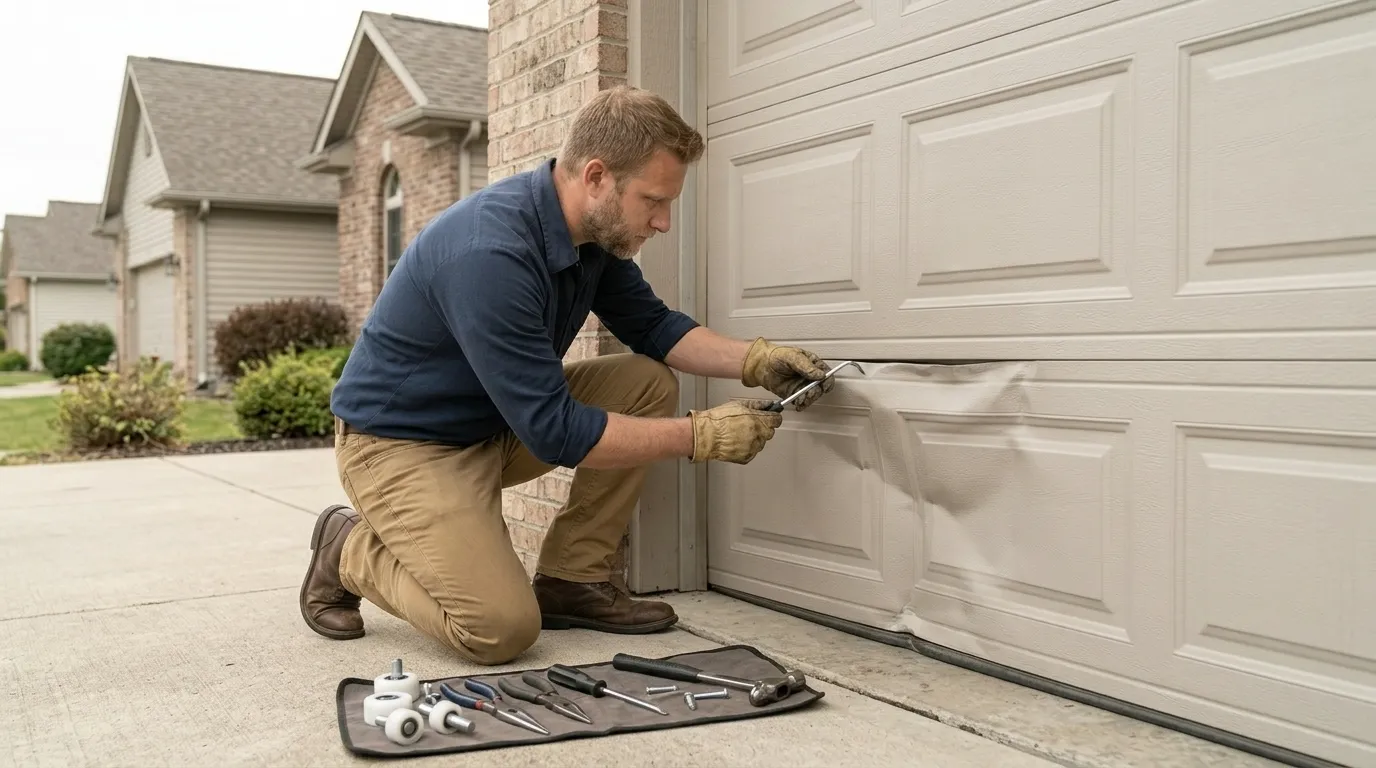
Track realignment on the older steel-track doors takes longer than it does on newer aluminum track, because the steel bends instead of springing back, and straightening it right means checking the whole run, not just the bent section. We give you a real number once we've looked at the door, not before.
Booking
We run this call out of Danville, about 10 miles from Stanford, so a visit here isn't a same-hour drop-in the way it might be for a job closer to the shop. Tell us the door's approximate age and whether it's a single or double when you call - for a town where most doors date to the mid-70s, that alone tells us which spring rating and roller size to load before we leave. See [garage door service in Stanford](/garage-doors-stanford/) for what's covered on this side of the service area, or check our [main Danville page](/garage-door-service-danville-ky) if you're outside Stanford proper.
Local causes
With roughly 1,500 households in Stanford and most of the housing stock dating to the same mid-1970s stretch, a lot of these doors are hitting the same failure points at close to the same time - springs rated for 10,000 cycles that were installed new in 1977 and never touched since. Add a moderate-cold climate that swings the steel panel and header wood through seasonal contraction each year, and the lag bolts holding the torsion anchor loosen faster than they would in a milder region. That's the fault we see repeatedly here: a spring that finally lets go on a door nobody thought needed attention, on hardware nobody's replaced since it was installed.
Pricing
Stanford's median household income runs around $55,000, a bit above the wider service area's $50,910, and that shows up less in what people ask for and more in what they're willing to fix versus replace.
On a door from the mid-70s era, a spring or roller job is usually worth doing - the door itself, once serviced, has plenty of life left.
Where it stops making sense is a door with a warped panel or a track bent badly enough that alignment can't hold; at that point you're paying to patch something that'll fail again within a year, and replacement is the honest answer even though it costs more upfront.
Our process
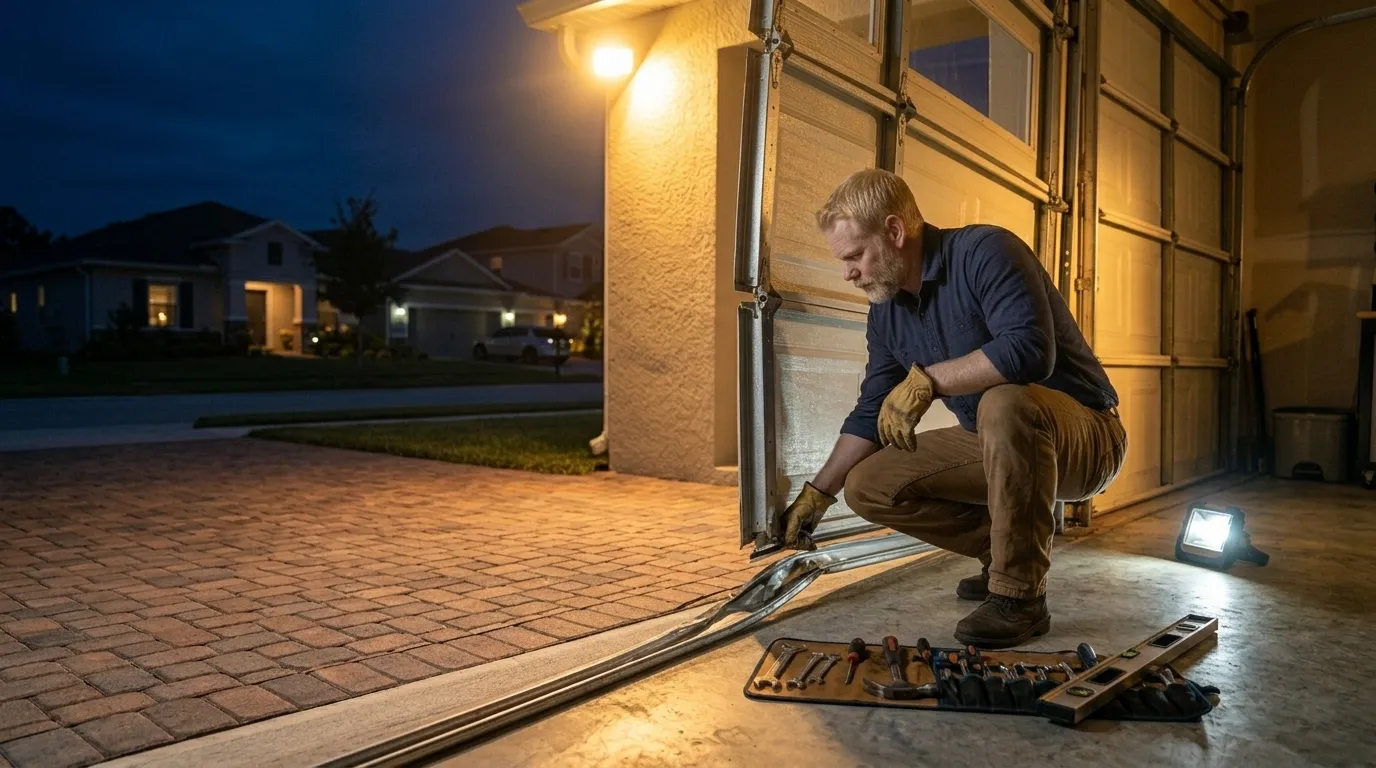
We start by matching the door to its era before touching a wrench - checking whether the torsion anchor is original or a retrofit, whether the track is steel or a later aluminum swap, and whether the opener predates or postdates the door itself, since those two don't always match on a house that's had one or the other replaced separately. From there it's a standard sequence: spring tension released safely, worn rollers and cables swapped, track checked for the kind of bend that comes from age rather than impact, and the opener's force settings reset if the door's weight has changed with the repair. We don't recommend a full door replacement unless the panel or frame itself has failed - hardware repair on a sound 1970s-era door is usually the right call, not the upsell.
Questions
Most Stanford homes were built around 1977, so the original or first-replacement garage door is usually a single-layer steel panel on steel track from that era, running on either extension or early torsion spring setups. We size parts to that hardware when we head out.
No. We run out of Danville, about 10 miles away, and drive out for Stanford calls. There's no branch or depot here, so let us know the door's age and size when you book so we bring the right parts the first trip.
On most 1970s-era Stanford doors, yes - the panel and frame are usually still sound, and a spring or roller job restores the door for a fraction of replacement cost. Replacement only makes sense once the panel is warped or the track is bent beyond straightening.
A lot of Stanford's roughly 1,500 households were built in the same mid-1970s window, so springs rated for a set number of cycles are wearing out on a similar schedule. Add seasonal cold swings on the metal and hardware, and failures tend to cluster.
Explore more
Ready when you are
Danville Garage Door Pros repairs and installs garage doors, springs and openers in Danville, KY and the surrounding area.