
Photo-eye sensor failure signs
A homeowner replaces a chain-drive opener with a newer belt unit but keeps the original steel door and its worn hinges, and the new opener strains against a door it was never sized for.
Junction City, Danville
Junction City runs about 1,001 households and most garages date to the early 1970s. We drive the 4 miles from Danville to fix openers built for that era of hardware.
Job timing
Junction City is small - about 1,001 households, nowhere near the size of the towns that make up the bulk of our opener calls. That matters for how this work goes. In a town this size, we're not chasing a dozen different eras of garage hardware; we're mostly looking at one. Houses here cluster around 1974, close to the wider service area's median build year of 1972, and that means openers installed original or replaced once in the 80s or 90s share the same basic bones - chain drives, older logic boards, wall buttons wired straight to the head unit rather than run through a smart hub. We come out from Danville, four miles up the road, so a Junction City call isn't a special trip - it's a short one. But because the town is small, we don't have a local crew sitting idle waiting on it; we schedule it in with the rest of the day's route. That's not a complaint, it's just how a town this size works into the map.
Watch-outs
The trouble with opener repair in a place built mostly in the early 1970s is that the door and the opener are often two different ages pretending to be one system.
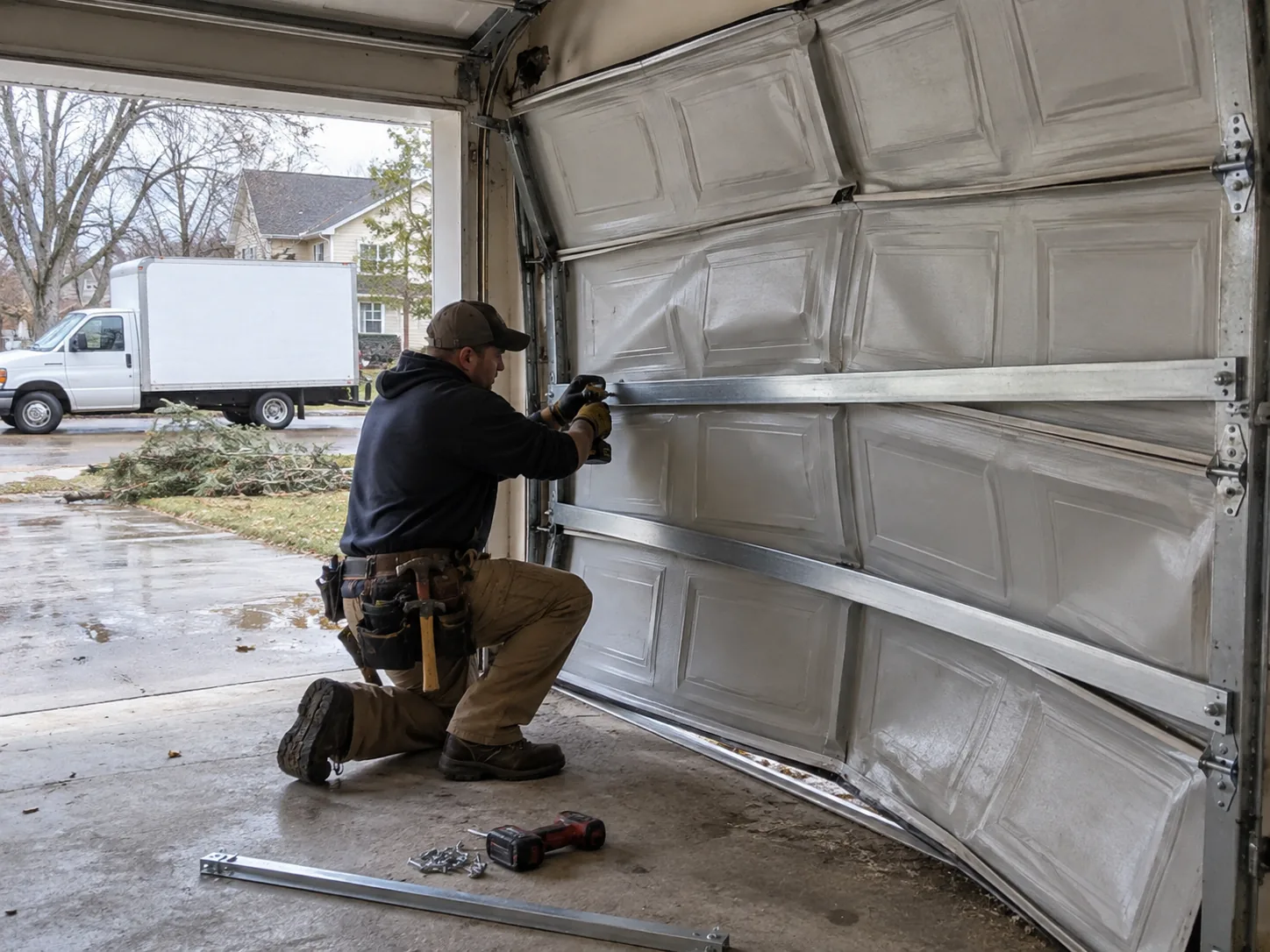
A homeowner replaces a chain-drive opener with a newer belt unit but keeps the original steel door and its worn hinges, and the new opener strains against a door it was never sized for.
Or the opposite: the door gets replaced, but the opener - thirty or forty years old - keeps running because it still technically works, until the gears strip trying to lift a heavier insulated panel than it was built for.
Either way, the failure looks like 'the opener is broken' when the real cause is a mismatch nobody flagged when the parts were swapped separately over the years. We see this pattern often enough in towns with this housing profile that it's usually the first thing we check, not the last.
DIY or pro
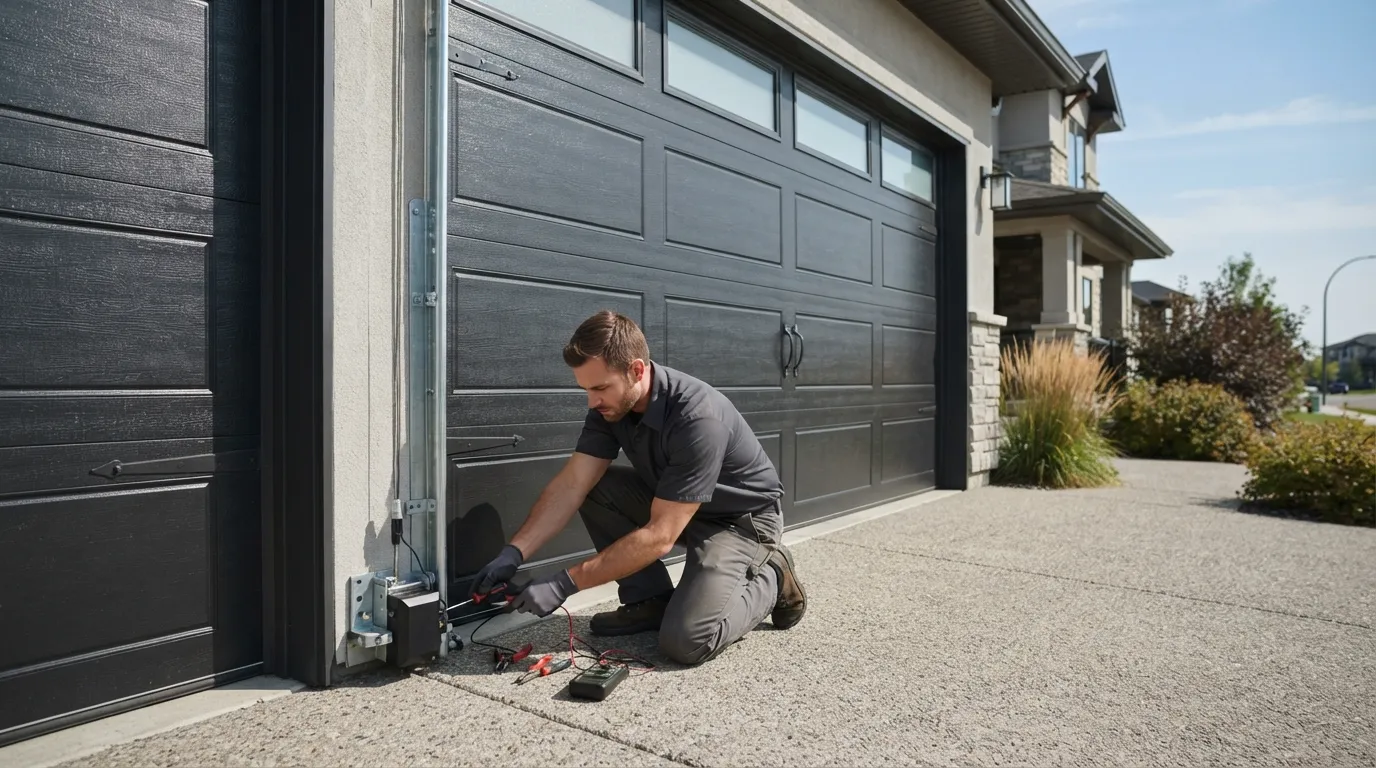
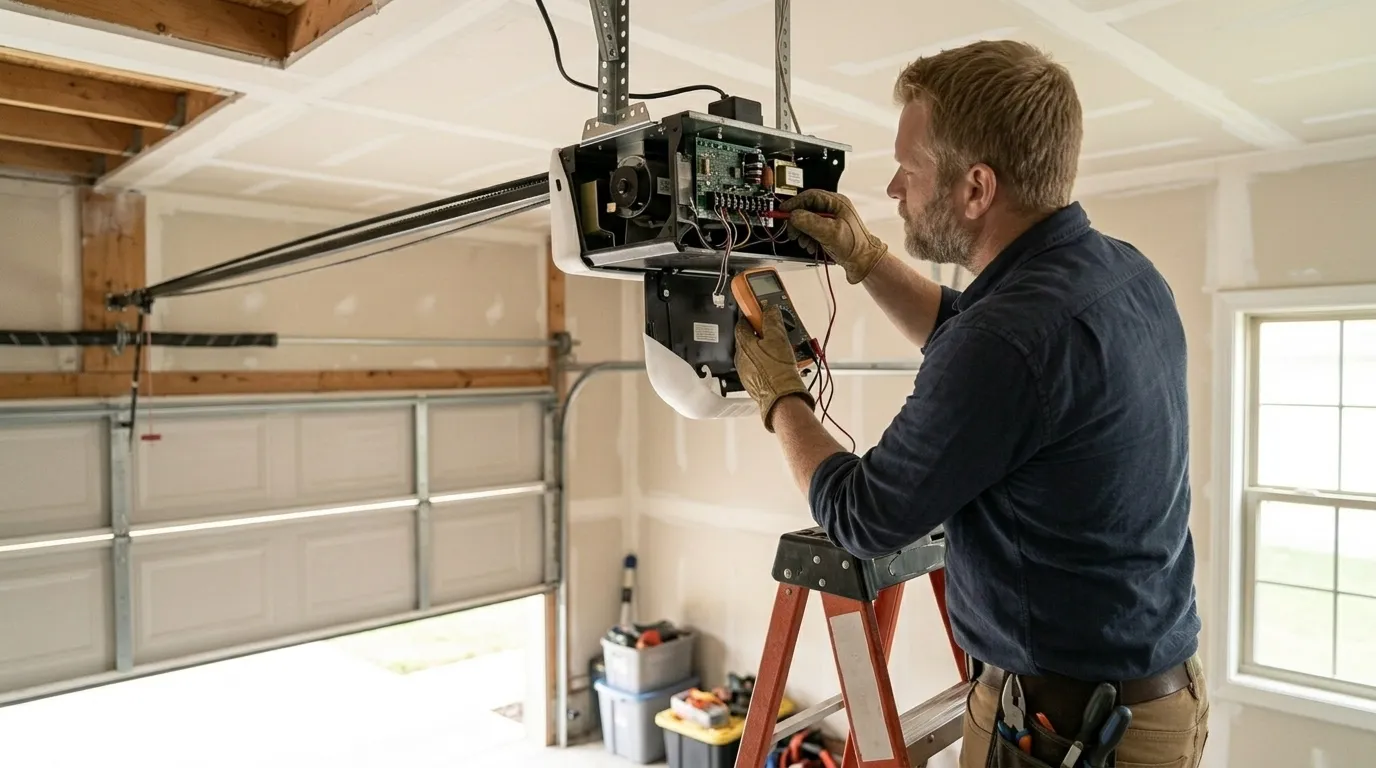
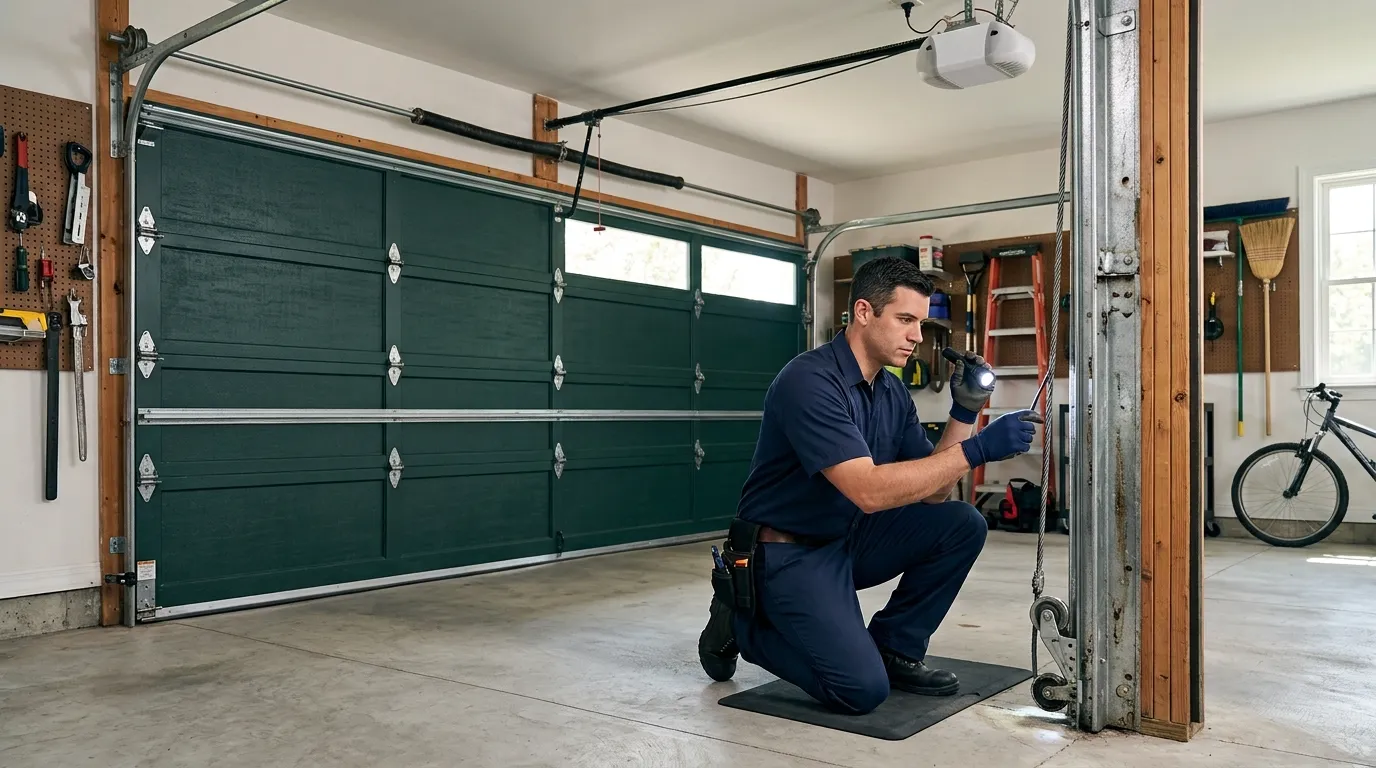
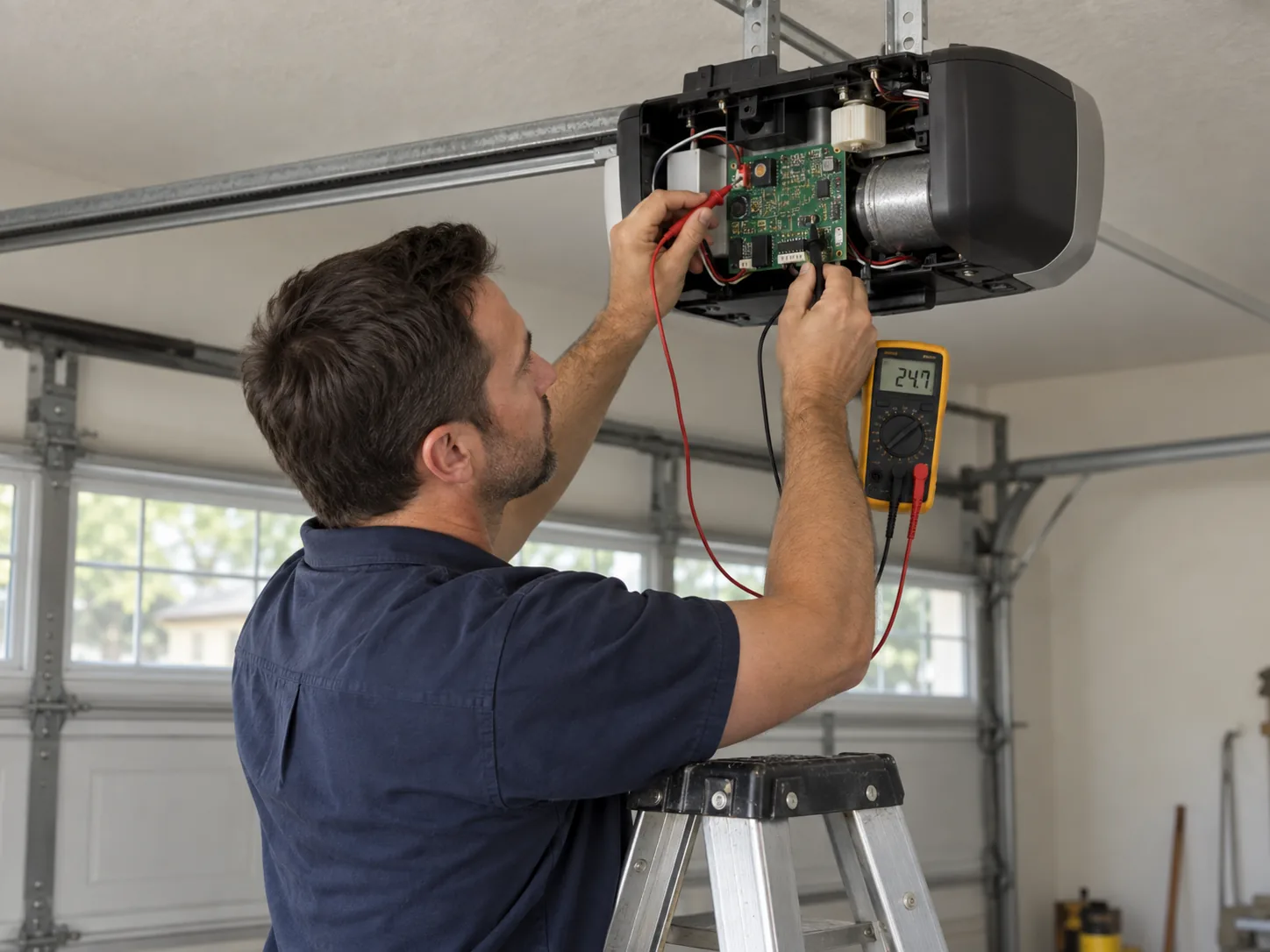
Some of this is fair game for a homeowner. Reprogramming a remote, replacing batteries in a wall unit, checking that the photo-eye sensors near the floor are aligned and not caked in dust - all reasonable, all something you can do with a screwdriver and ten minutes. What isn't worth doing yourself is anything involving the logic board, the drive gear, or the door's spring tension while the opener is attached. On a chain-drive unit from the 70s or 80s, parts are often no longer made, and forcing a repair with a mismatched part can strip the rail or burn out the motor for good. If your opener is that old and stops responding to reprogramming, replacement is usually the honest answer, not another repair.
Warning signs
On the older openers common to this area, the failure usually announces itself as one of three things: the motor hums but the door doesn't move (stripped gear or a broken drive chain), the light blinks and the door reverses right after closing (misaligned or dirty safety sensors), or the remote works some days and not others (a failing logic board or a wall switch with corroded contacts).
None of these are dramatic. They're wear failures, the kind you'd expect from hardware that's been running since before most of the neighborhood's current owners bought their houses.
With a median household income here of $40,917 - below the wider service area's $50,910 - we try to be upfront early about whether a repair is worth the cost versus a straight opener swap, rather than run up a bill on a unit that's near the end of its life anyway.
Our process
We start by testing the opener under load, not just listening to it run empty, because a chain-drive unit that sounds fine can still be one bad pull from stripping its gear. If the fix is a gear kit, a capacitor, or a sensor realignment, we do it on the spot from the truck stock we carry out of Danville. If the unit is old enough that parts aren't available - which happens more often with hardware from the early 70s than anyone likes - we'll say so and lay out what a new opener costs installed, matched to your existing door rather than sold as an upsell. Either way you get a clear answer before we start, not after.
Questions
No. We're based in Danville and drive the four miles out for every call. There's no separate crew or depot here - it's the same trucks and technicians covering the whole service area.
Chain-drive openers from that era are mechanical, not electronic, and every part wears with age - gears, chains, capacitors. Once one part fails, others close behind it. At some point a $150 repair on a 45-year-old unit stops making sense next to a new opener with a warranty.
It's common in Junction City for a newer insulated door to end up paired with an older opener sized for a lighter original panel. If your opener strains, reverses, or runs hot, a mismatch is the first thing we check before assuming the opener itself is bad.
Explore more
Ready when you are
Danville Garage Door Pros repairs and installs garage doors, springs and openers in Danville, KY and the surrounding area.