Junction City, Danville

Garage Door Maintenance for Junction City's 1974-Era Doors

Junction City homes went up mostly around 1974 - single-layer steel doors on original hardware. Danville Garage Door Pros drives out 4 miles to service them.

Garage Door Maintenance for Junction City's 1974-Era Doors in Danville
Serving Danville, KYBackground-checked techsHonest, upfront pricingFast local response

Job timing

Time on the Job

Most of Junction City went up around 1974, and the garage doors that came with those houses are still on plenty of them: single-layer steel, no insulation, hung on the standard 8-by-7 or 16-by-7 opening builders used at the time.

Safe DIY inspection routine

There's no foam core in that panel, no vinyl backing, just a stamped steel face over an open frame. That construction was fine for the era, but it means every one of those doors is now pushing fifty years on original springs, original hinges, and in a lot of cases original rollers that were never swapped out because nothing ever broke hard enough to force it.

Unsafe spring-work boundary

We drive the 4 miles out from Danville for these calls regularly enough to know what we're going to find before we open the panel. A door that old wasn't built with sealed bearings or lifetime-rated torsion springs. It was built to standard, to code, and to last maybe half of the years it's actually lasted. That's not a criticism of the door.

Professional service value

It's just physics catching up with steel that's flexed open and shut two or three times a day for five decades. Maintenance on a door this age isn't the same job as maintenance on a ten-year-old door. It's slower, closer to inspection than tune-up, because you're deciding what still has life left versus what's one cold morning from failing.

Watch-outs

Where This Job Goes Sideways

The climate here runs cold and moderate, and that's the part that turns small wear into a snapped cable or a stuck track. Steel contracts in the cold.

Original hardware aging timeline

On a door built in 1974, the tolerances between roller and track were never generous to begin with, and forty-plus winters of contraction and expansion have opened up gaps that a newer door just doesn't have. Lubricant that was fine in October turns gummy in January, and a spring that was already fatigued takes the extra load of a stiff, cold-contracted track and lets go.

Concurrent part failure likelihood

The other place this goes wrong is the torsion spring itself. A spring rated for 10,000 cycles in 1974 has likely seen well past that if the door's been used daily for fifty years. Nobody tracks cycles on a residential door, so the spring doesn't announce it's tired - it just breaks, usually on the coldest morning of the stretch, because cold steel is more brittle than warm steel.

Preventive maintenance importance

We've also seen owners assume a slow-closing door just needs oil. Sometimes it does. More often on a door this age it's a bent track or a roller that's worn oval instead of round, and oil just buys another week before the real problem shows up anyway.

DIY or pro

Doing It Yourself

Some of this is fair to do yourself. Wiping down the track and vacuuming out the debris that builds up in the roller channel takes ten minutes and doesn't require touching anything under tension.

Spring-balance door testing

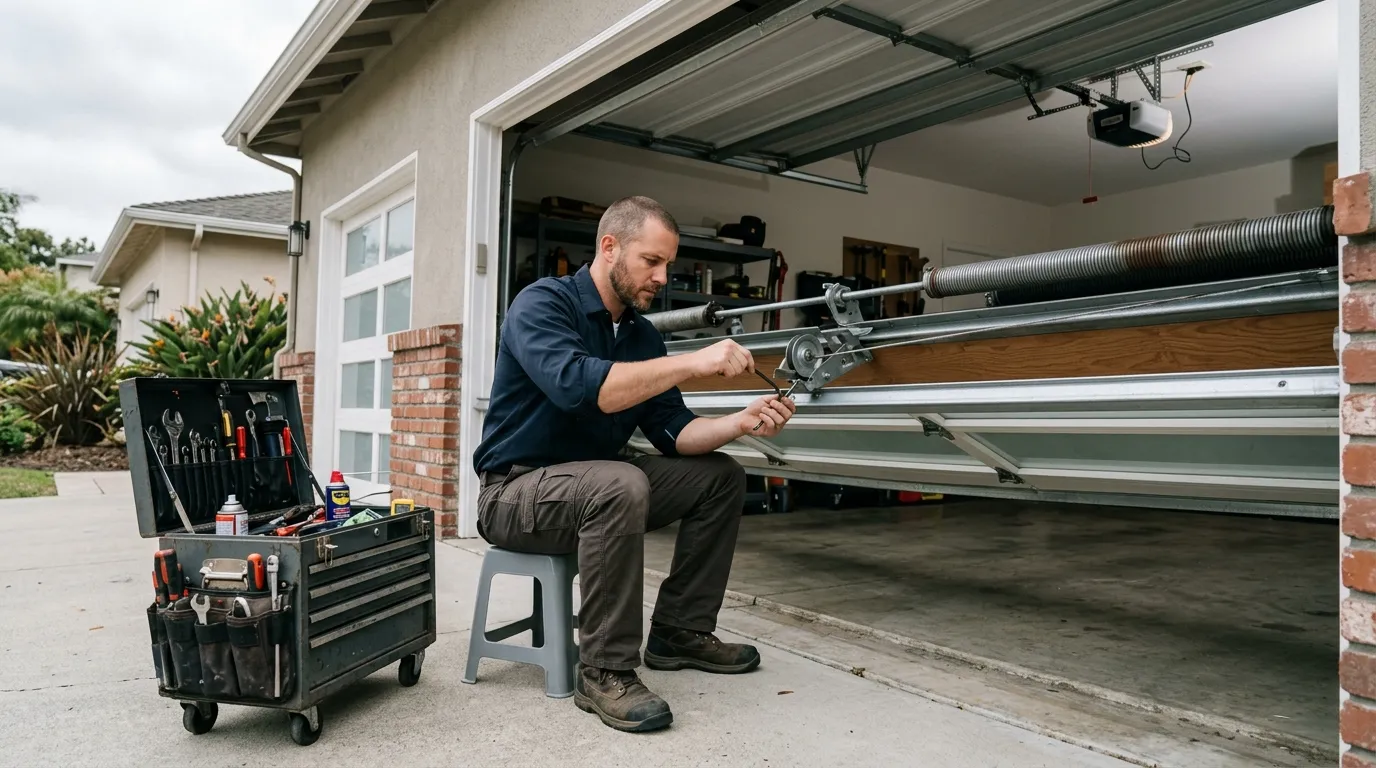
Checking that the weatherstrip along the bottom panel hasn't cracked is worth doing before winter, not after. What we don't recommend on a door this old is anyone opening up the spring assembly themselves.

Roller wear and lubrication

A torsion spring on a 1974-era door has been under load for a long time, and the winding cones and shaft can be more worn than they look. That's not a job where you get a second try if it goes wrong. We'll also say plainly: on some of these older doors, a repair isn't the better move.

Cable inspection protocol

If the spring's gone and the hinges are worn and the panel's dented from decades of use, patching one part just means the next part fails in six months. We'll tell you straight if that's where your door is instead of running up a bill on parts that won't hold.

Warning signs

What You Are Seeing

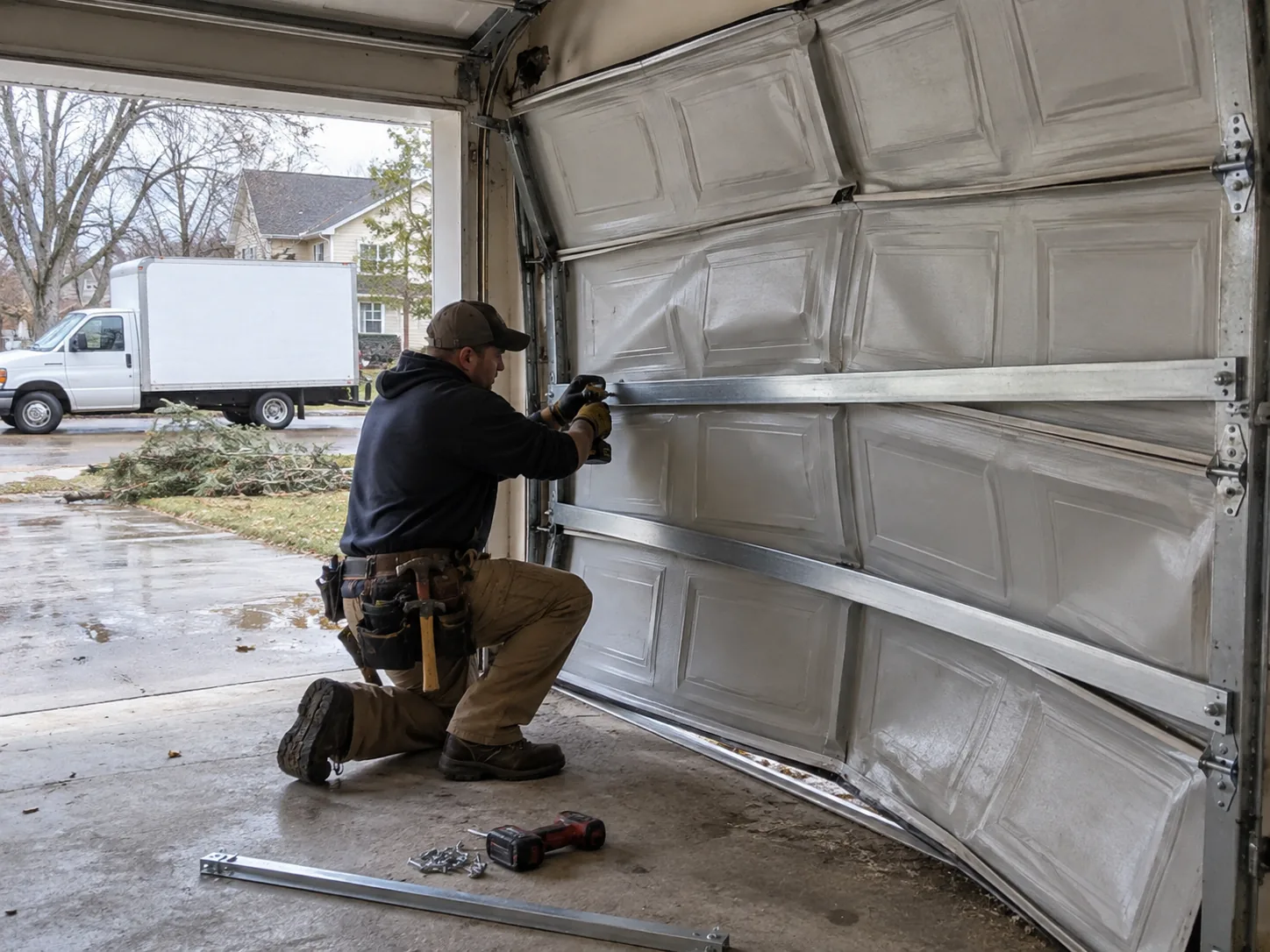
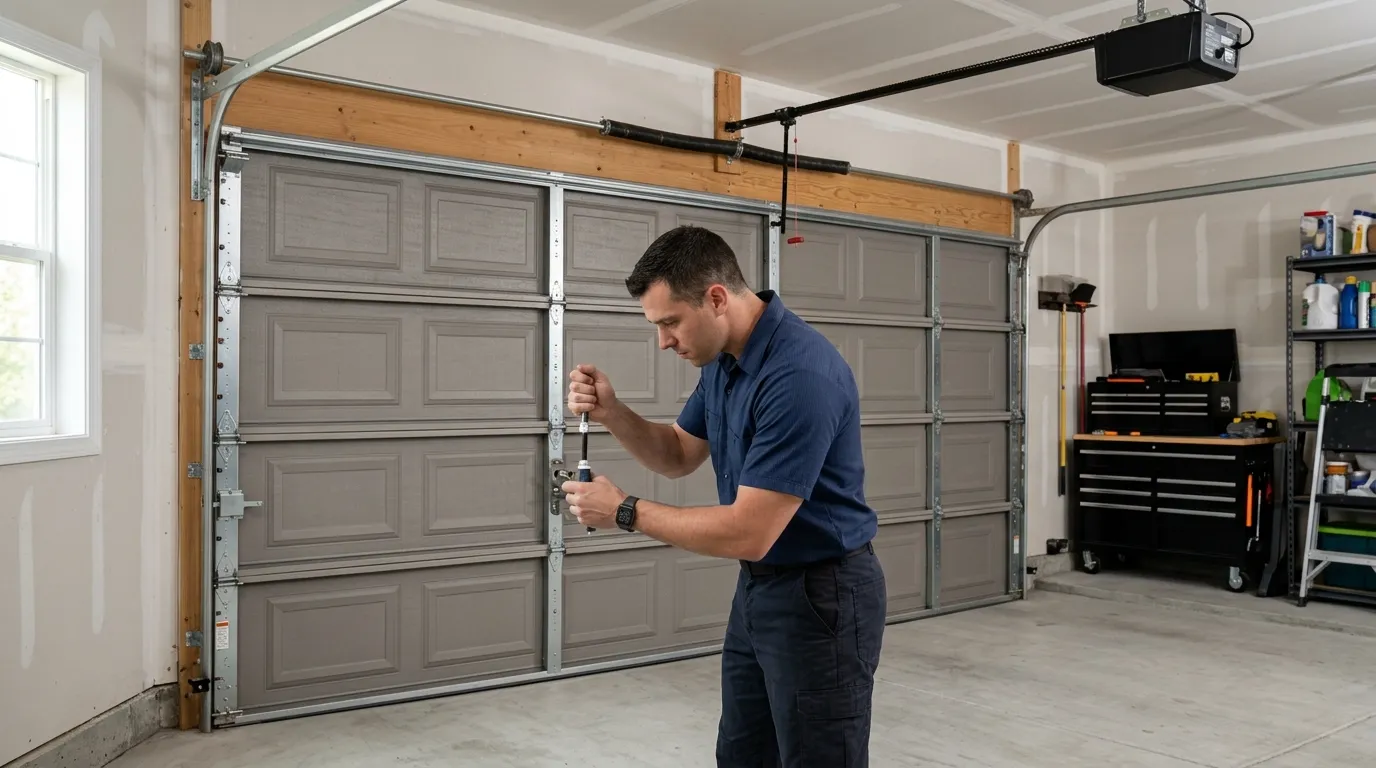
If your door came with the house and the house went up around 1974, here's what usually shows up first: a grinding or scraping sound as the door travels, which is almost always a roller that's worn past its bearing. A door that hesitates or jerks partway through its cycle points to a track that's shifted slightly out of alignment over the years, common on a foundation this age settling unevenly.

If the door feels heavier than it used to when you lift it manually, that's the torsion spring losing tension, not the door getting heavier. And if you hear a loud bang from the garage on a cold morning, that's very likely the spring itself finally letting go under the combined weight of age and cold steel.

None of these are emergencies you have to solve alone, but none of them get better by waiting either.

What You Are Seeing

Our process

How We Fix It

For a door this age, we start by checking the spring's wind and tension before touching anything else - that tells us whether we're looking at an adjustment or a replacement.

  1. Roller upgrade to sealed units

    Rollers get swapped for sealed units if the originals are worn oval, and we true up the track where the gap between roller and rail has opened beyond spec.

  2. Standard spring size inventory

    We carry standard-size torsion springs that fit the 8-by-7 and 16-by-7 openings common on Junction City's 1974-era houses, so most spring jobs don't need a special order. Where the door itself is failing - panel rust-through, a frame that's racked - we'll say so and talk replacement instead of stringing along a repair.

  3. Prepared truck dispatch strategy

    Every visit here is a trip out from Danville, so we come prepared to finish the job in one call rather than diagnosing on one visit and returning for parts on another.

Questions

Common questions

How old are most garage doors in Junction City

Most houses in Junction City were built around 1974, and a lot of them still have the original steel garage door and hardware. That means original torsion springs, hinges, and rollers that are now pushing five decades of daily use, which is well past what most of that hardware was designed to handle.

Do you have a location in Junction City

No, we're based in Danville and drive the 4 miles out to Junction City for every call. We don't keep a branch or depot there, so we schedule the trip when we book the job rather than dispatching from a local yard.

Why did my spring break on a cold morning

Cold steel is more brittle, and a torsion spring that's already fatigued from decades of cycles is more likely to fail when the temperature drops. In our climate here, that combination of an aging spring and a cold morning is the most common reason for a sudden break.

Is it worth repairing an old door instead of replacing it

Sometimes, sometimes not. If the spring's gone but the panel and track are solid, a repair makes sense. If the panel's rusted through or the frame is racked along with a failing spring, patching one part just means the next one fails soon after, and we'll tell you if that's what we're looking at.

Ready when you are

Need a garage door sorted in Danville?

Danville Garage Door Pros repairs and installs garage doors, springs and openers in Danville, KY and the surrounding area.

Call Now(859) 450-2313