
Guide
Why Danville Garage Doors Fail the Way They Do
Danville homes mostly went up between 1969 and 1991. That build era and our cold winters are why torsion springs here fail the way they do. Here's what actually happens.
Local detail
How Local Conditions Play In
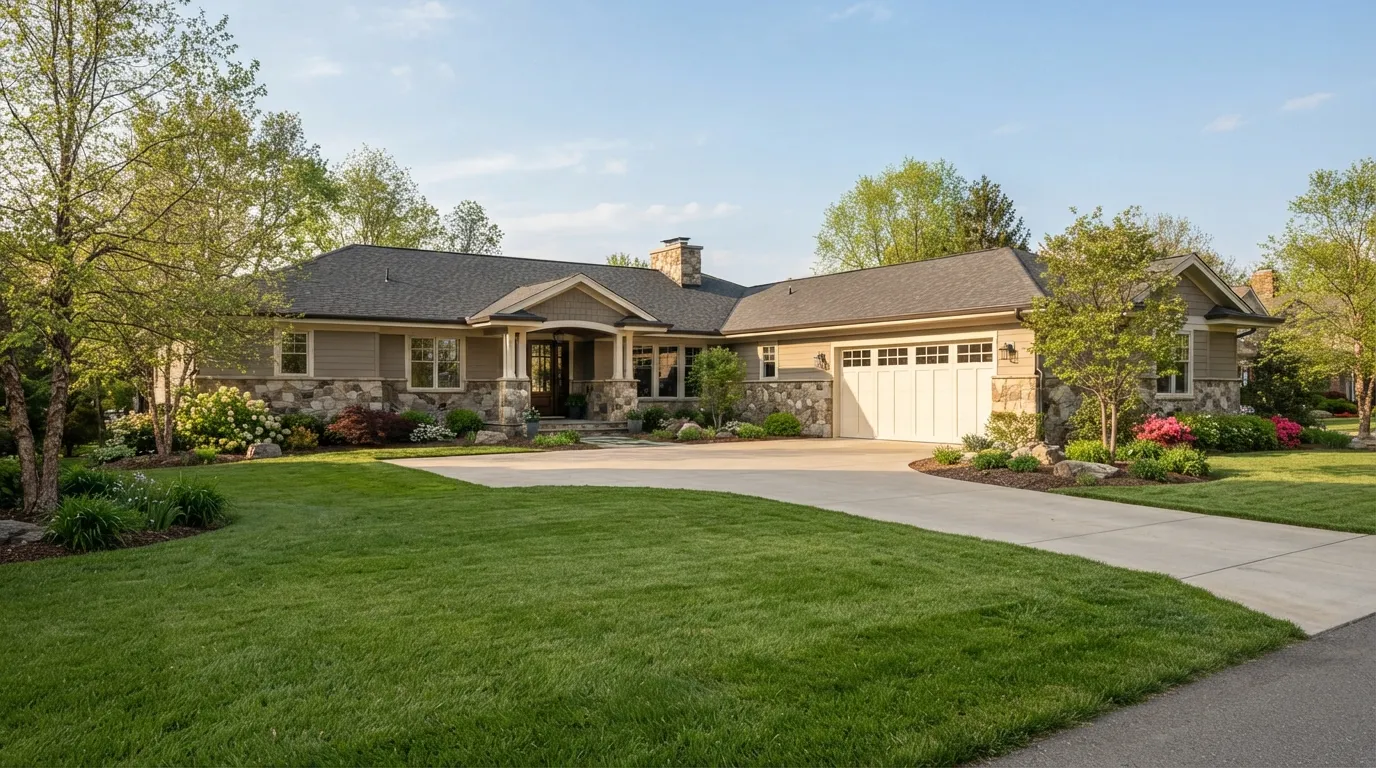
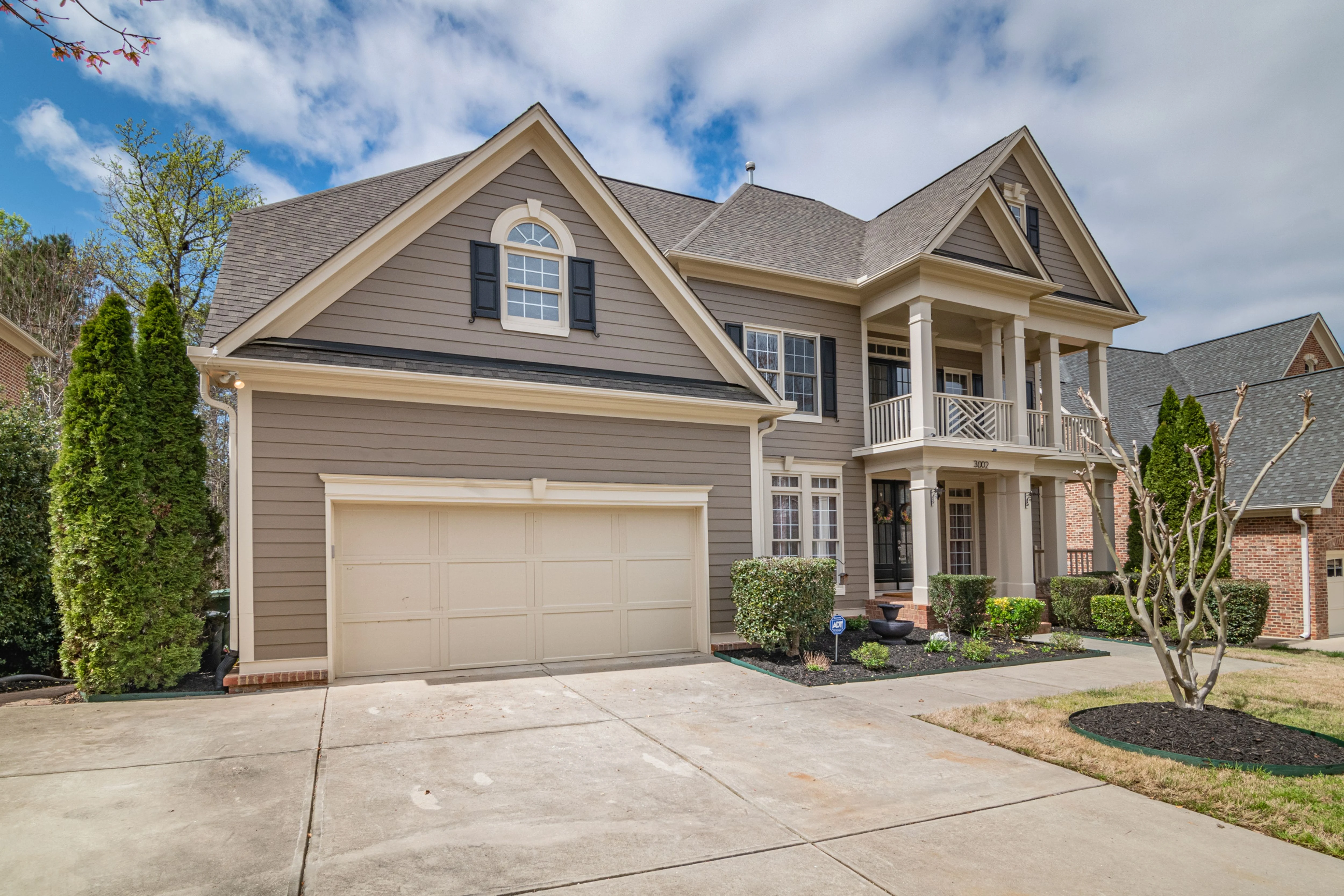
Most of the houses in Danville went up between 1969 and 1991, with the median sitting right around 1972. That matters more than people think. A door installed with a house built in the early 70s is on its second or third opener by now, but a lot of them are still running the original torsion spring setup or a direct swap from decades ago that was never resized for a heavier steel door.
The housing stock across the six main pockets of town skews 1960s and 70s, which means a lot of garages built to a lighter standard than what's sold today. Add in a cold, moderate winter climate band and you get a spring that's already fatigued from forty-plus years of cycling, sitting in a garage that swings from near-freezing overnight to warmer by afternoon. That expansion and contraction is what turns a spring that's merely old into a spring that's about to let go.
It's not dramatic until it is. A spring doesn't usually give a warning shudder for weeks. It holds fine, then on a cold morning it doesn't.
The area
Where People Go Wrong
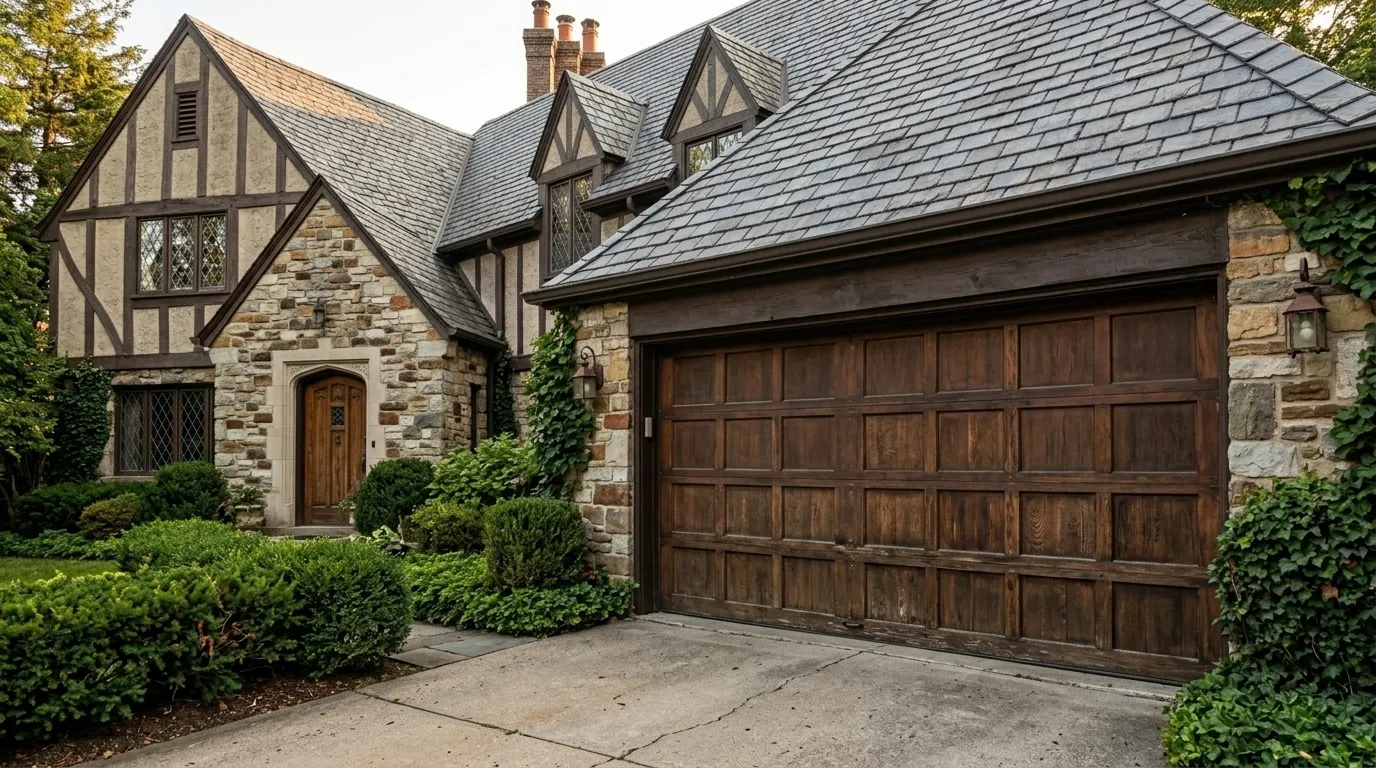
The most common mistake we see is treating a 1970s-era torsion spring like it's fine because the door "still goes up." A spring under tension in a cold garage can look completely normal right up until the coil cracks. By the time a homeowner hears the bang, the spring has usually been degrading for a year or more.
The second mistake is lubricating in the middle of a cold spell and assuming that fixes noise or stiffness. It quiets things down temporarily but does nothing for a spring that's past its cycle life on an opener that's original to a house built decades ago.
The third is waiting. Once a door this old starts binding on one side or the cable starts fraying near the drum, pushing it another winter usually ends with the door coming down on the track, not just a broken spring. Given how much of the local housing stock is in that same 1969-1991 window, this isn't a rare situation here - it's the normal call we get from October through February.
What we find
What You Pay
We can't give you a number without seeing the door - a broken spring on a single door is a different job than a full opener and hardware swap on a door that's outlived its panels, and we're not going to quote blind. That's a limitation, not a dodge.
What we can tell you is how the decision usually shakes out here. Median household income across the service area runs around $50,910, and that number shapes a lot of the repair-versus-replace conversation we have on the driveway. For a door that's structurally fine but running old torsion hardware, a spring and hardware repair is almost always the right call. For a door where the panels are rusted through or the opener is original to a 1970s build and parts aren't sold anymore, replacement ends up cheaper over five years than repeated repair calls.
We look at the door, tell you straight which side of that line you're on, and give you the number before anything gets touched.
How we work
What Is Going On
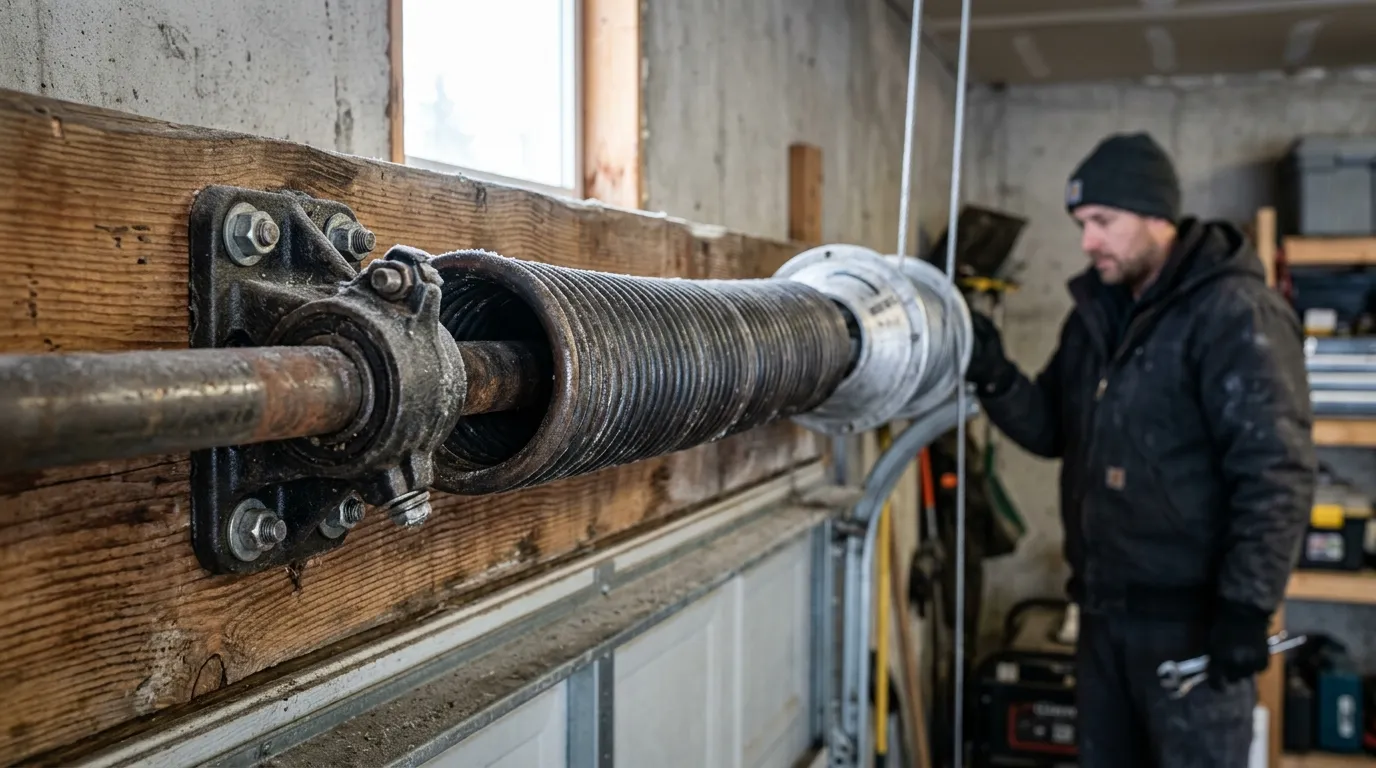
Physically, here's what's happening. A torsion spring stores energy by twisting around a shaft. Every open and close cycles that twist. Over forty-plus years - which is the age range a lot of Danville garages are hitting now, given the median 1972 build year - the steel fatigues at a molecular level. Cold makes steel less ductile, so a spring that would bend a little before failing in July just snaps clean in January.
Cables see the same aging, just slower - fraying near the drum where they wrap and unwrap thousands of times. Openers from that same era, if they haven't been swapped, are running motors and gear sets that were never built for the load of a heavier modern door if a panel replacement happened at some point without upgrading the opener to match.
Across the service area - Junction City four miles out, Burgin eight, Harrodsburg and Stanford ten, Lancaster eleven, Wilmore eighteen - the mix shifts some, but the core issue is the same: a lot of hardware installed once, decades ago, still doing the job it was never meant to do this long.
Questions
Common questions
How old does a spring have to be before it's a real risk?
There's no fixed number of years, but if your house was built in the 1969-1991 range that's common around Danville and the spring has never been replaced, you're well past the normal cycle life. Cold mornings are when a tired spring is most likely to go. If you don't know when it was last done, assume it hasn't been.
Can you give me a price over the phone?
Not honestly. A broken spring repair and a full opener-and-hardware job are priced completely differently, and guessing wrong either overquotes you or undercuts the actual work. We look at the door and the opener first, then give you a firm number before touching anything.
Is it worth repairing an opener that old or should I replace the whole thing?
Depends on the door it's attached to. If the panels and track are solid and it's just the opener or spring, repair usually makes sense. If the door itself is original to a 1970s build and starting to sag or rust, replacing both together often costs less over time than fixing one part at a time.
Do you work outside Danville proper?
Yes. We cover the surrounding area including Junction City, Burgin, Harrodsburg, Stanford, Lancaster, and Wilmore, though the housing stock and typical door age shifts a bit as you move further out.
Ready when you are
Need a garage door sorted in Danville?
Danville Garage Door Pros repairs and installs garage doors, springs and openers in Danville, KY and the surrounding area.