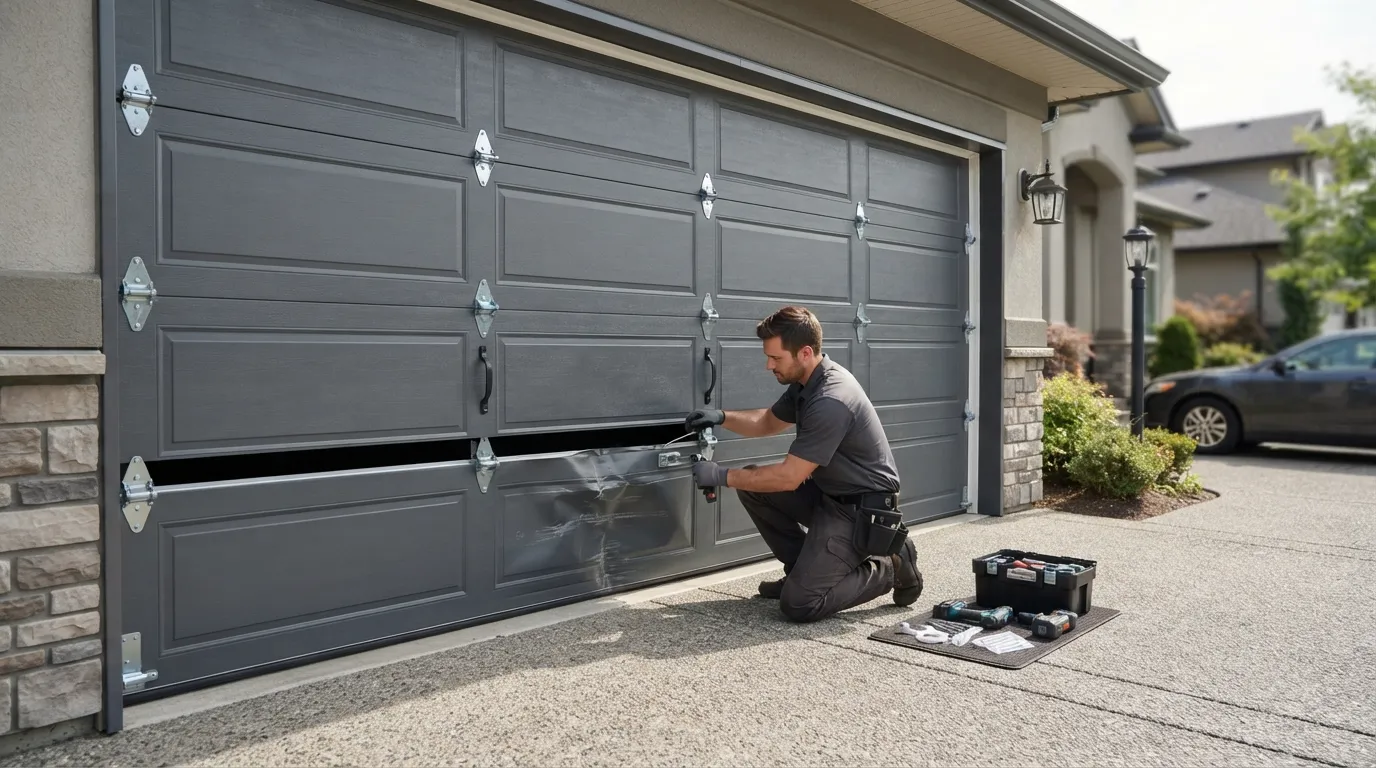
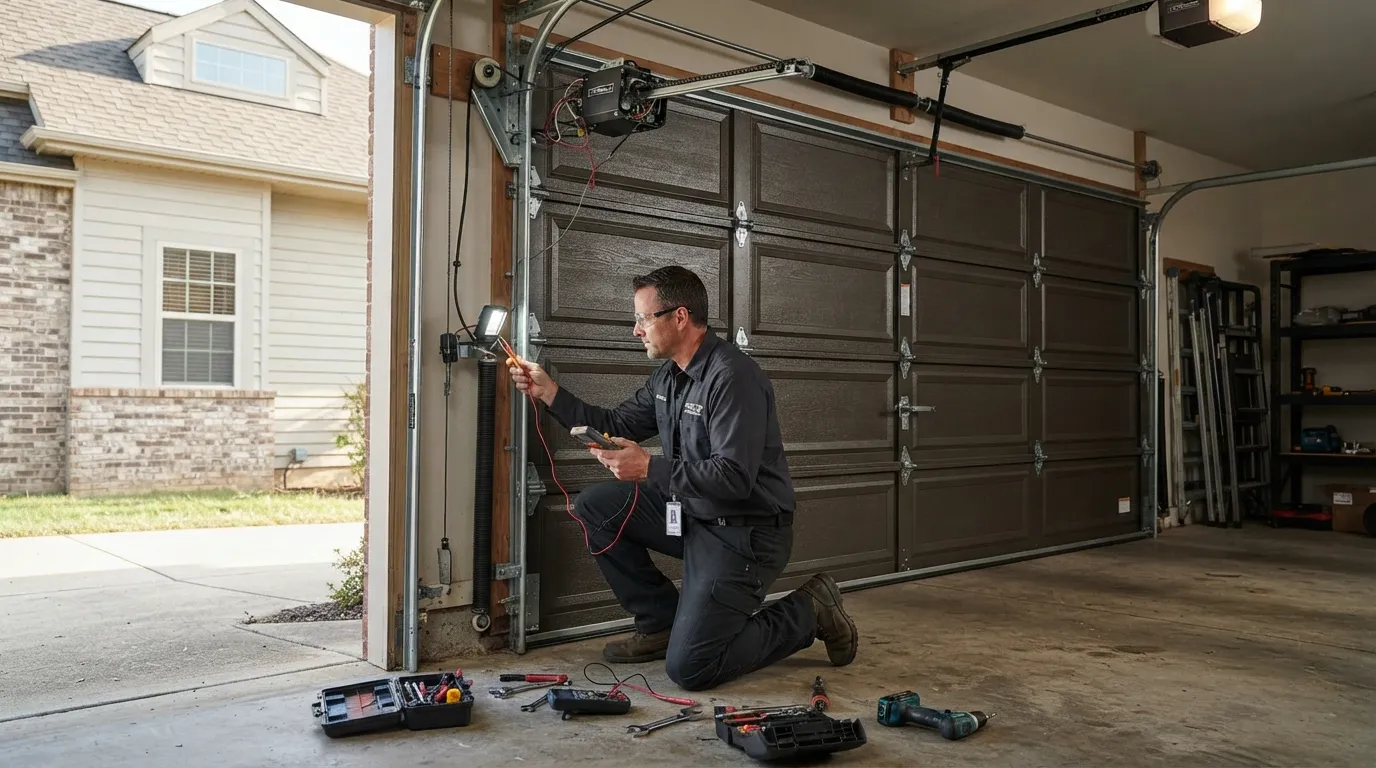
With 4,044 households in Harrodsburg, most of them in owner-occupied houses from that same early-1970s building wave, the failures we get called out for cluster tightly: original torsion springs that have simply run out of cycles, single-layer steel panels that have started to oil-can or bow, and roller tracks that were installed dead level fifty years ago and have since settled with the slab.
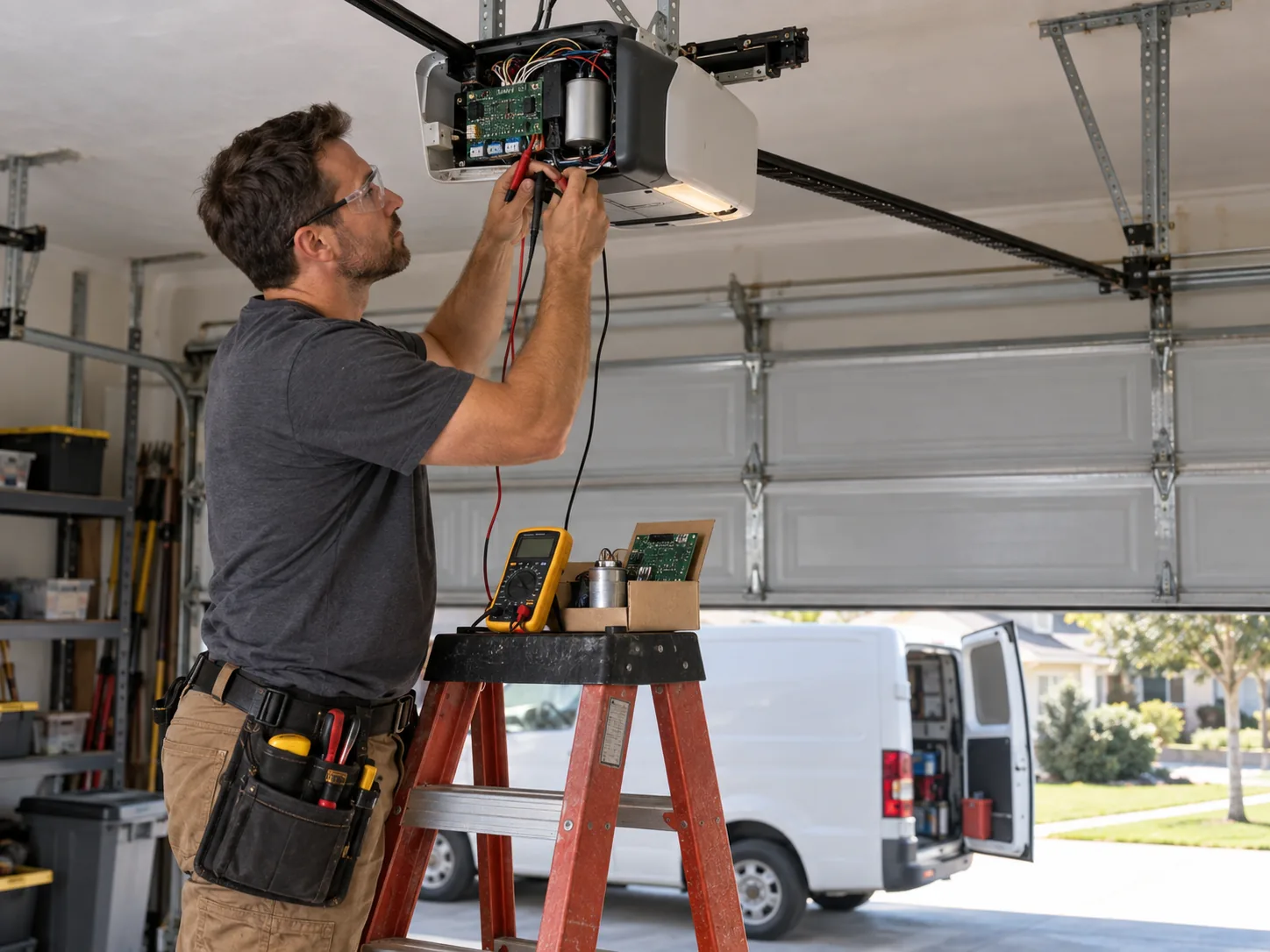
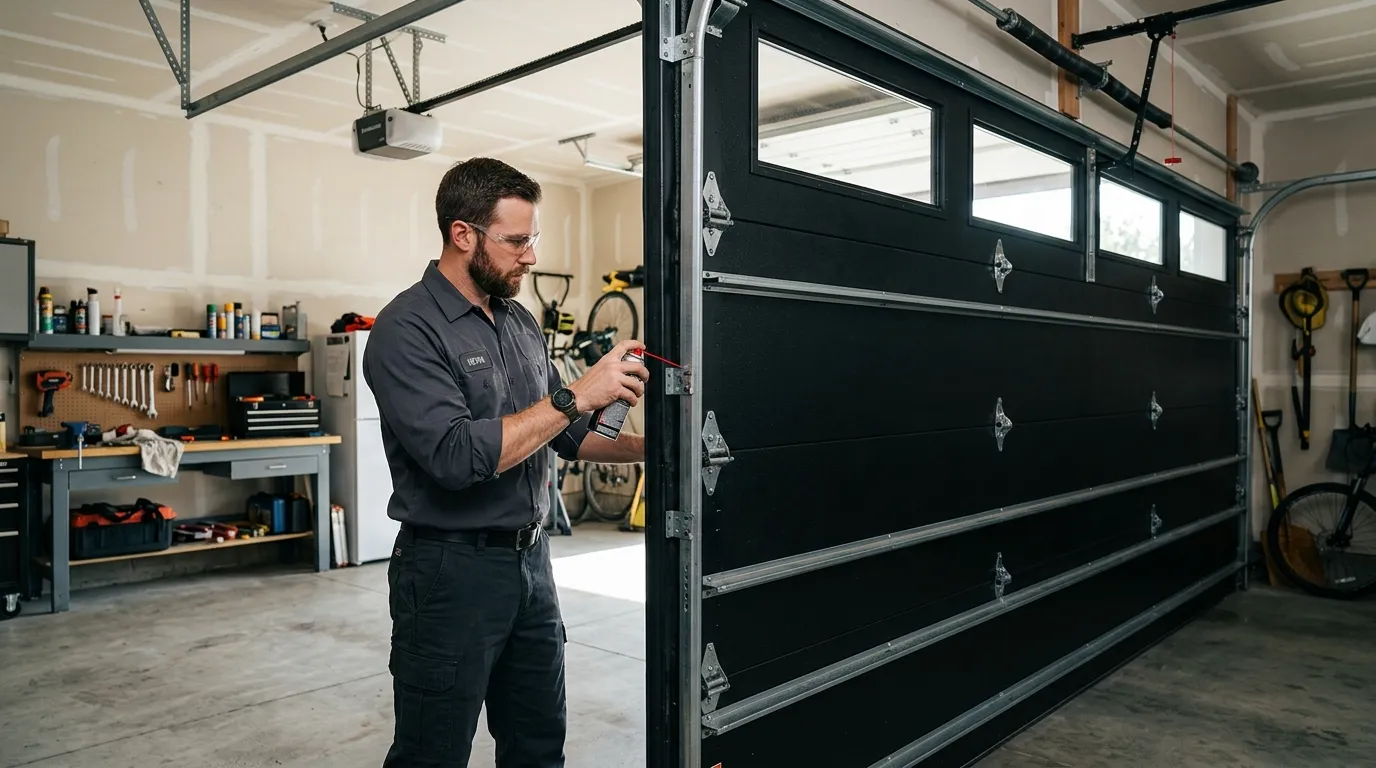
The cold moderate climate here doesn't produce the cracking you'd see in a harsher freeze-thaw zone, but it does stiffen old lubricant in the tracks and rollers every winter, which is often what turns a quiet, slow-closing door into one that jerks, sticks, or reverses on the opener's safety sensor. That symptom gets read as an opener problem more often than it should be - the opener is usually just reacting correctly to a door that's binding.
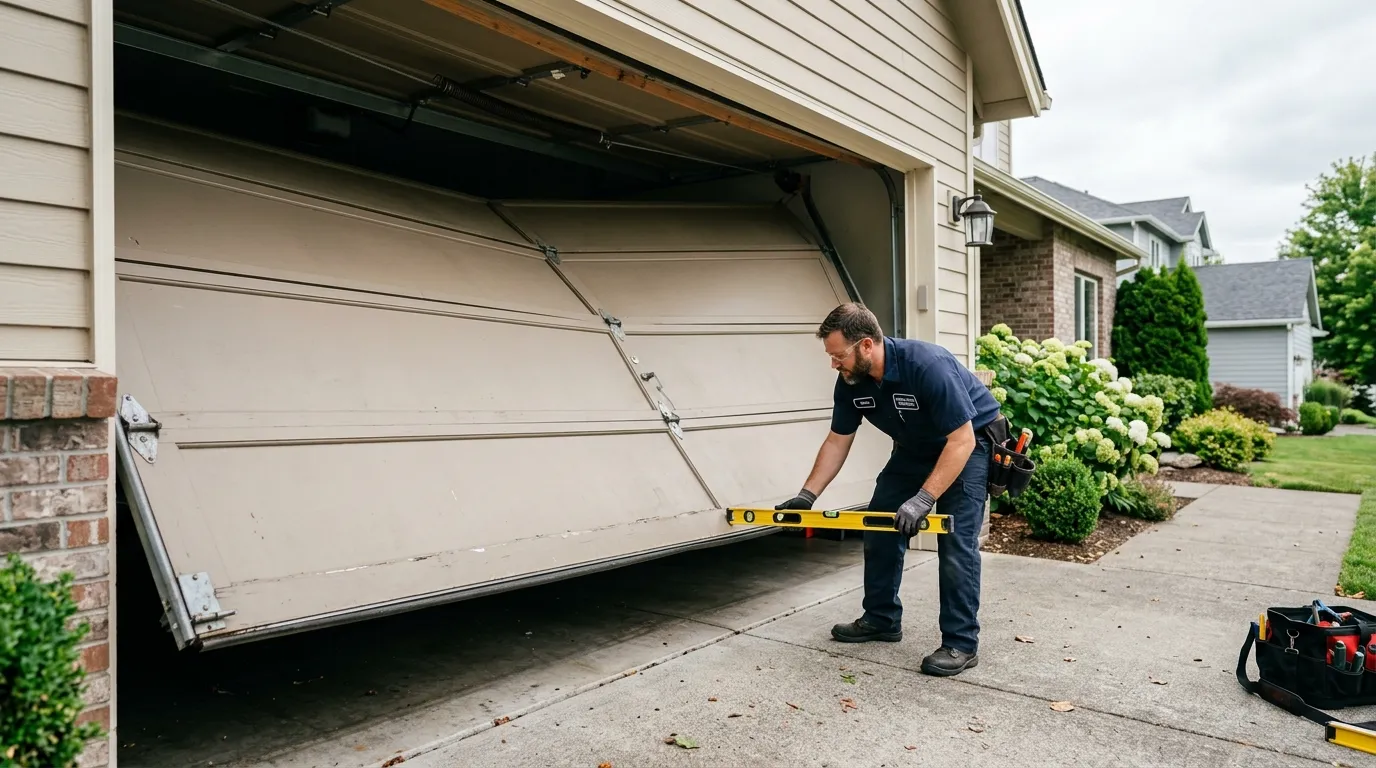
If your door is grinding, sagging on one side, or won't stay open without a hand under it, that's a spring or cable problem, not a lubrication problem, and it won't improve with WD-40. Catching it before the cable fully lets go is cheaper than the call that comes after.